

In a significant ruling on public employment and reservation, the Supreme Court of India has clarified that candidates from reserved categories who secured higher marks in the main selection exam cannot be denied entry into the general category merely because they availed relaxation in a qualifying test.
The judgment came in a batch of appeals challenging a recruitment process for teachers in Maharashtra.
Background of the Case
The case arose from the Teachers Aptitude and Intelligence Test (TAIT) 2022 conducted for recruitment of teachers across Maharashtra.
Read also:- Tribals Must Prove Existing Custom To Claim Exemption From HMA: MP High Court
Several candidates belonging to reserved categories had cleared the Teacher Eligibility Test (TET) with relaxed qualifying marks, as permitted under government policy. However, despite scoring higher marks than general category candidates in the final TAIT exam, they were excluded from the open category merit list.
Their writ petitions were dismissed by the Bombay High Court, which held that candidates who used relaxation could not migrate to the general category.
At the heart of the dispute was a narrow but important question:
Can a reserved category candidate who used relaxation in a qualifying exam still compete in the general category based on merit in the main exam?
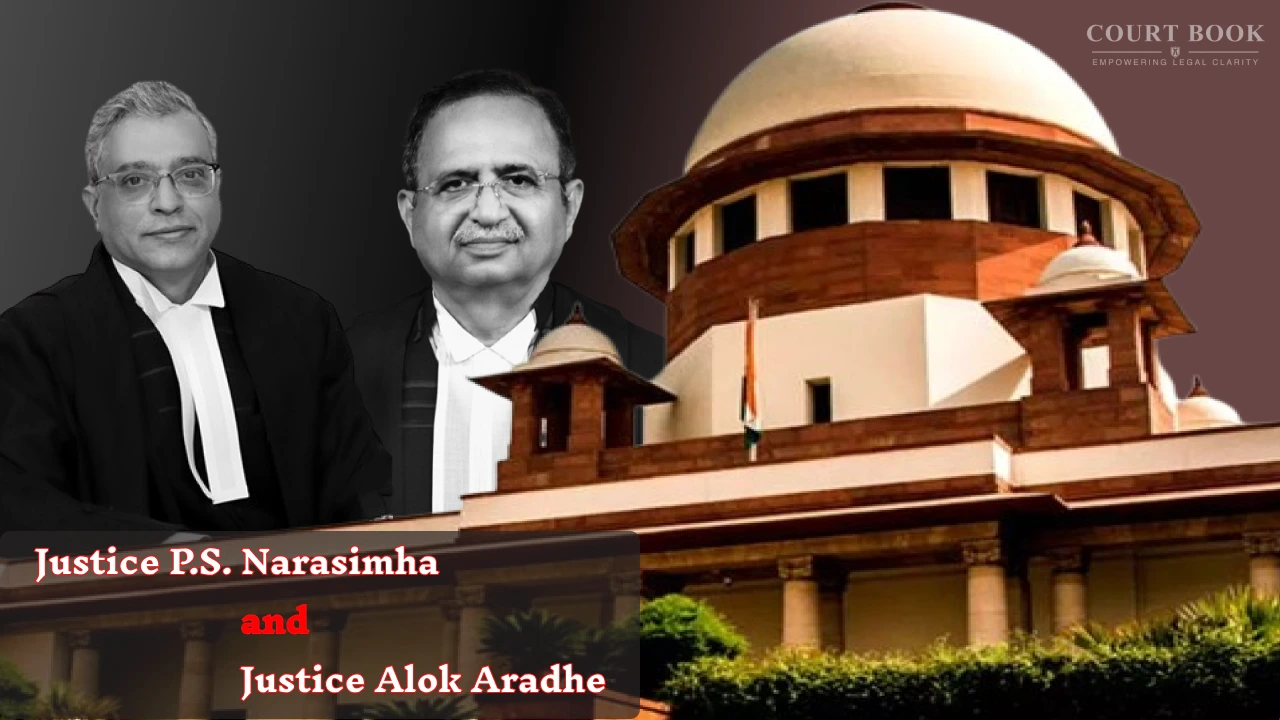
The bench, led by Justice Alok Aradhe, drew a clear distinction between eligibility and merit determination.
Read also:- Busybody Litigation Stalled Petrol Pump for 6 Years: Supreme Court Sets Aside NGT Orders
The Court explained that relaxation in a qualifying exam like TET only helps a candidate become eligible to participate it does not affect the merit ranking in the final selection.
“The relaxation in qualifying criteria only enables participation… the inter se merit must be determined solely on performance in the main examination,” the Court observed.
Importantly, the Court noted that:
• No relaxation was given in the main TAIT exam.
• All candidates competed on equal footing in the final stage.
• The recruitment rules did not explicitly prohibit migration to the general category.
The bench also clarified that earlier rulings denying such migration applied only where candidates failed to meet essential eligibility criteria not where relaxation was legally permitted.
Read also:- Dismissal Without Notice Valid After Corruption Conviction: Gujarat High Court Rejects Constable’s Plea
The Supreme Court found fault with the High Court’s reliance on earlier judgments without examining the factual context.
It observed that applying those rulings mechanically led to an incorrect conclusion, as the present case involved valid relaxation allowed under statutory guidelines.
“The High Court erred in placing reliance… without appreciating the factual matrix,” the bench noted.
Setting aside the High Court’s judgment dated February 14, 2025, the Supreme Court allowed the appeals.
It directed the authorities to:
• Include reserved category candidates in the general merit list if they scored higher than the last selected general category candidate.
The Court held that in the absence of an express bar in recruitment rules, such migration is legally permissible.
Case Title: Chaya & Ors. v. State of Maharashtra & Anr.
Case Number: Civil Appeal Nos. of 2026 (arising out of SLP (C) Nos. 14517–14539 of 2025)
Judge: Justice Alok Aradhe (with Justice Pamidighantam Sri Narasimha)
Decision Date: March 23, 2026
Download Judgment

