

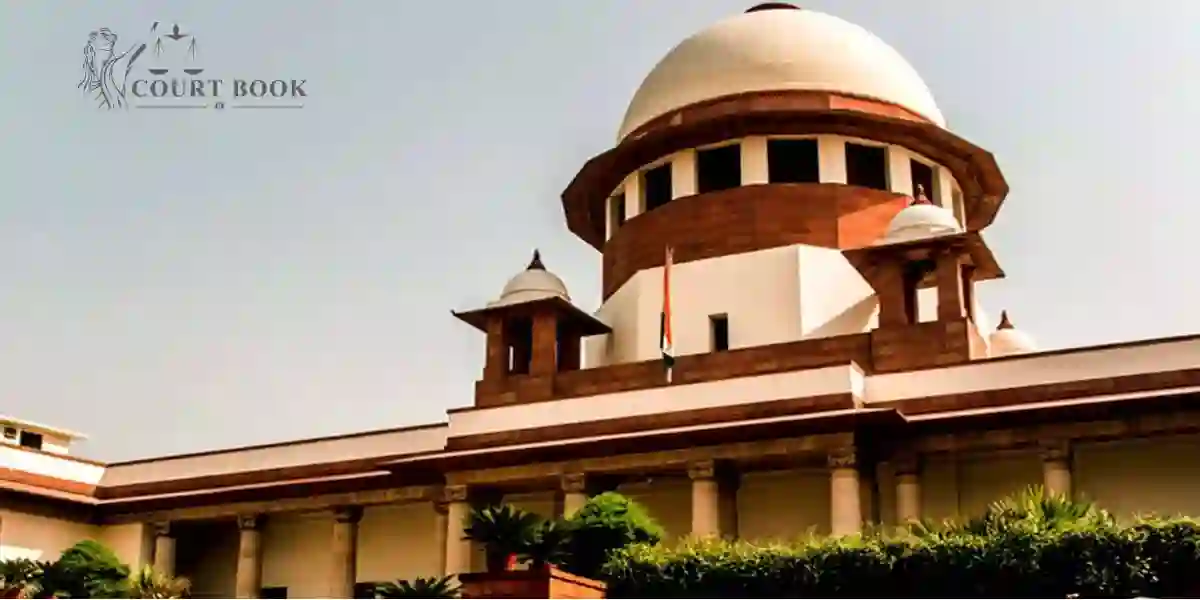
Inside Court No. 1 on Wednesday, the Supreme Court quietly but firmly cleared the air on a question that has been lingering in judicial corridors for months - how far ad-hoc judges in High Courts can go when it comes to forming benches. The matter arose in a long-running public interest case filed by Lok Prahari, and the clarification came from a three-judge Bench led by the Supreme Court of India.
हिंदी में पढ़ें
What looked like a technical issue on paper ended up touching the everyday functioning of High Courts across the country.
Background
The original writ petition dates back to 2019, when Lok Prahari approached the apex court raising concerns about governance and institutional functioning. Over the years, the case threw up several connected issues, including the appointment and role of ad-hoc judges - judges appointed for a temporary period to deal with mounting case backlogs.
Read also:-Andhra Pradesh High Court Rejects State's Land Acquisition Appeal, Upholds Enhanced
In January 2025, the Supreme Court had passed an order laying down certain parameters. However, applications were later moved seeking clarification and modification, particularly on whether ad-hoc judges could sit together, or be paired with regular judges, and who would take that call.
Those applications came up for hearing on December 18, with the petitioner appearing in person and the Union of India represented by the Attorney General and Solicitor General.
Court’s Observations
Reading out the order, the Bench made it clear that the power to decide bench combinations rests squarely with the Chief Justice of the concerned High Court.
Read also:-Calcutta High Court Declines Arbitration Route in New India Assurance–HDFC Bank Lease Dispute
“The bench observed, ‘If there are two ad-hoc Judges appointed in the High Court, it will be the prerogative of the Hon’ble Chief Justice of the High Court to constitute their Division Bench.’”
The court went a step further, noting that even a mixed bench - one ad-hoc judge and one sitting judge - can be formed, provided it is agreeable to both judges. There would be no blanket rule or restriction from the Supreme Court’s side.
Importantly, the judges also clarified that ad-hoc judges can sit as single judges without any legal obstacle. This, the Bench noted, was necessary to ensure smooth court functioning and avoid unnecessary procedural doubts.
In plain terms, the Supreme Court said: trust the Chief Justices. They are best placed to know how benches should be formed in their own courts.
Read also:-Supreme Court Defers Hearing in Rajneesh Kumar Pandey Case, Allows States to Continue
Decision
With these clarifications, the Supreme Court modified its earlier order dated January 30, 2025, and also held that the main judgment delivered on April 20, 2021, would be treated as clarified to that extent. The application seeking clarification was disposed of, and the connected intervention plea was closed as a consequence.
Case Title: Lok Prahari Through Its General Secretary S.N. Shukla (Retd.) v. Union of India & Ors.
Case No.: Writ Petition (Civil) No. 1236 of 2019
Case Type: Public Interest Litigation (PIL)
Decision Date: 18 December 2025
Download order

