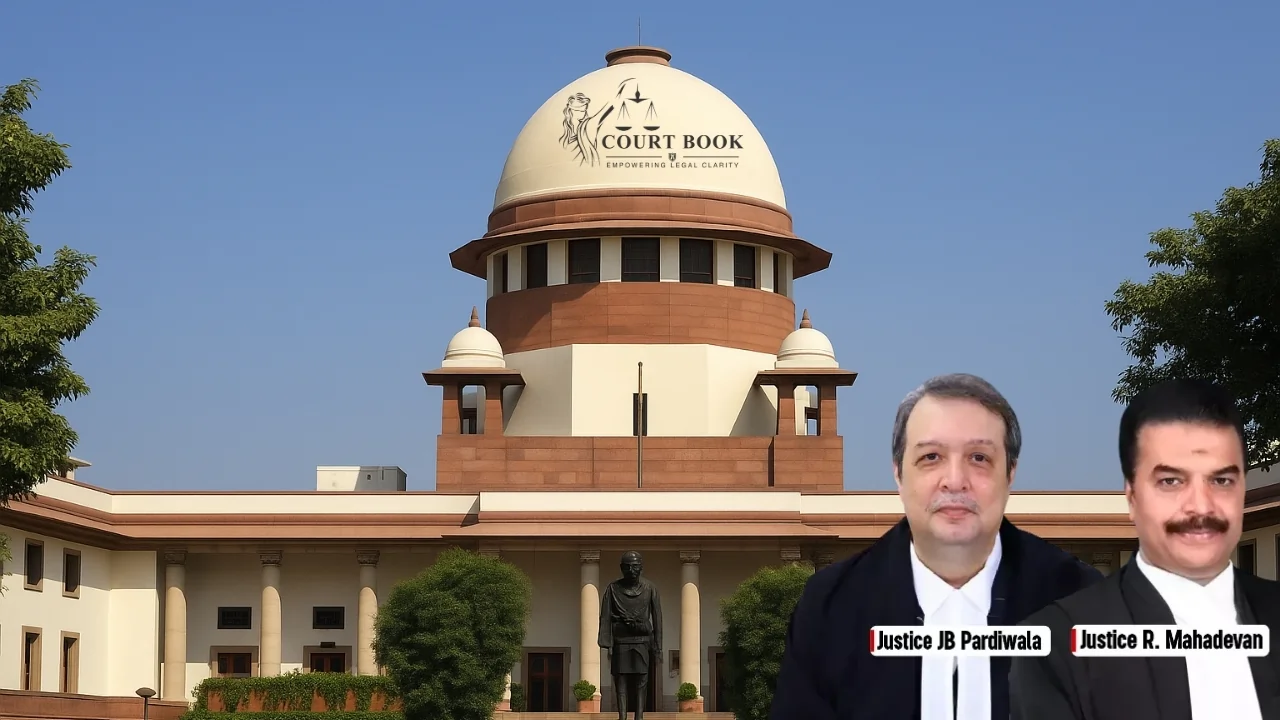
The Supreme Court on Thursday January 15 expressed deep concern over the rising number of student suicides across India’s higher educational institutions, calling it a “national crisis” that can no longer be ignored. While hearing a criminal appeal related to mandatory FIR registration, the court went beyond the immediate dispute and issued sweeping directions aimed at safeguarding student mental health.
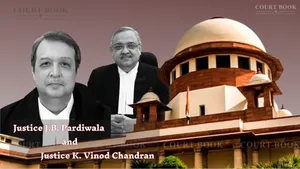
The bench of Justices J.B. Pardiwala and R. Mahadevan made it clear that universities and colleges cannot distance themselves from such tragedies and must accept institutional responsibility.
Background of the Case
The matter arose from a criminal appeal where the Supreme Court had earlier clarified that police must register an FIR whenever a cognizable offence is disclosed. During those proceedings, the court noticed a disturbing pattern - repeated reports of student suicides from campuses across the country.
Recognising the seriousness of the issue, the court had constituted a National Task Force (NTF) to examine why students in higher educational institutions (HEIs) were increasingly taking their lives and what systemic failures were contributing to this distress.
The Task Force submitted an interim report detailing academic pressure, discrimination, lack of counselling support, financial stress, and weak grievance mechanisms as major triggers.
Court’s Observations
Reading out key portions of the report, the bench noted that suicide is among the leading causes of death for young people aged 15–29 in India, with student suicides touching nearly 13,000 cases in a single year.
Read also:- Supreme Court Restores Life Term in Himachal Burn Case, Backs Dying Declaration to Overturn Acquittal
“The figures before us are not just statistics. Each number represents a life lost and an institutional failure that demands introspection,” the bench observed.
The judges rejected the tendency of institutions to blame such incidents solely on personal reasons.
“Educational institutions cannot shirk away from their fundamental duty to ensure that campuses are safe, inclusive and supportive,” the court said.
The bench also highlighted how many colleges merely comply with regulations on paper. Equal Opportunity Cells, Internal Complaints Committees, and anti-ragging bodies often exist only in name, leaving students without real support when they need it most.
Read also:- Avaniyapuram Jallikattu Will Be State-Run, Not by Private Committee: Madras High Court Rules
Key Findings on Student Distress
The court took note of several stress factors identified by the Task Force, including:
• Extreme academic competition and rigid attendance rules
• Faculty shortages and overburdened students
• Ragging that continues under the guise of “bonding”
• Delayed scholarships causing financial anxiety
• Absence of trained mental health professionals on campus
Medical and technical students, in particular, were found to be facing exploitative schedules, burnout, and unrealistic expectations.
Supreme Court Directions
Invoking its powers under Article 142 of the Constitution, the Supreme Court issued binding directions to all higher educational institutions in the country.
Read also:- Supreme Court Stays SASTRA Eviction Order, Tells State Not to Treat Campus Land Dispute as a Prestige Issue
Most significantly, the court ordered that every incident of student suicide or unnatural death must be reported to the police immediately, irrespective of whether it occurs on campus or outside.
“All HEIs must report such incidents no sooner than they come to know of them,” the bench directed.
The court also mandated:
• Separate data collection for higher education student suicides
• Annual reporting of such incidents to the UGC and other regulators
• Round-the-clock access to medical help in residential institutions
• Filling vacant faculty and administrative posts within four months
• Clearing pending scholarships within a fixed timeline
• Strict compliance with anti-ragging, anti-discrimination and grievance redressal regulations
Read also:- Sex on Promise of Marriage Not a ‘Private Dispute’: Allahabad High Court Lets Trial Continue
“No student should be barred from classes, exams or hostels due to delayed scholarships,” the bench warned.
Decision
Recording its appreciation for the work done by the National Task Force, the Supreme Court directed the Union and State governments to immediately circulate its orders to all higher educational institutions and ensure strict compliance.
The matter now awaits the Task Force’s final report, which is expected to propose a unified national framework for student well-being and suicide prevention in Indian campuses
Case Title: Amit Kumar & Ors. v. Union of India & Ors.
Case Number: Criminal Appeal No. 1425 of 2025
Date of Order: January 15, 2026
Download Order



-300x169.webp)
-300x169.webp)