

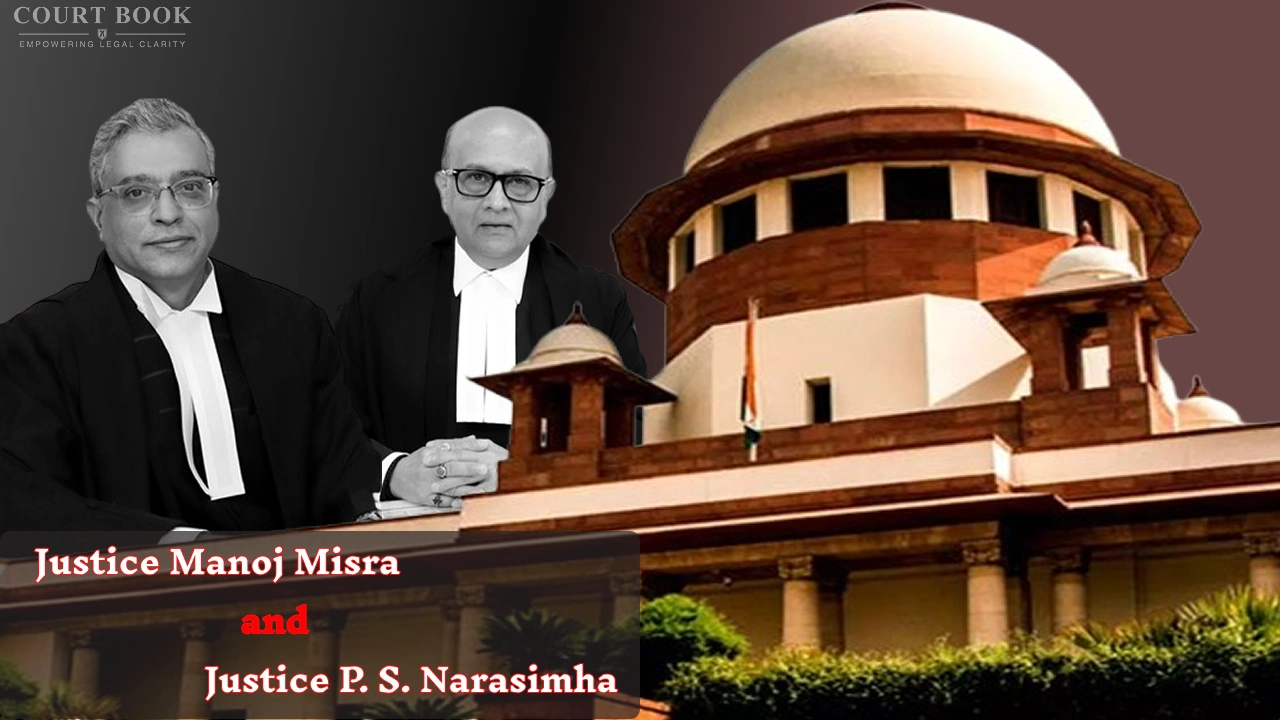
In a significant ruling on disciplinary proceedings after retirement, the Supreme Court has upheld action taken against a former bank officer, clarifying that penalties can still follow even after superannuation if proceedings began earlier.
The Court dismissed the appeal filed by Virinder Pal Singh, affirming the Punjab and Haryana High Court’s decision and backing the bank’s authority to continue disciplinary proceedings.
Background of the Case
The case traces back to 2011, when Virinder Pal Singh, an officer of Punjab and Sind Bank, was served a charge sheet alleging irregularities in loan disbursement on the very day he retired.
Read also:- No Cheating in Movie Loss: Supreme Court Quashes FIR Against Filmmaker
Despite his retirement, the disciplinary proceedings continued. One charge failure to ensure proper use of a loan was found partly proved. The bank then imposed a penalty reducing his pay scale by three stages permanently, which impacted his pension.
Singh challenged this before the High Court, arguing that after retirement, only pension-related penalties could be imposed. While a Single Judge initially agreed with him, the Division Bench reversed that ruling, leading to the present appeal before the Supreme Court.
The appellant argued that once he retired, the employer-employee relationship ended, and therefore, the bank could not impose service-related penalties like reduction in pay.
Read also:- Delhi High Court Gives Kejriwal, Sisodia Time to Reply in ED Plea Over Excise Policy Remarks
His counsel insisted that only action under pension rules such as reducing pension or recovery was legally permissible after retirement.
On the other hand, the bank argued that its service regulations clearly allow disciplinary proceedings to continue even after retirement, provided they were initiated while the employee was still in service.
The Bench examined whether disciplinary proceedings could continue after retirement and whether the penalty imposed was valid.
On the issue of misconduct, the Court noted that the officer failed to ensure the proper use of loan funds, with large cash withdrawals lacking supporting documents.
Read also:- Snake Venom Case: Supreme Court Quashes FIR Against YouTuber Elvish Yadav
“The charge that the appellant had failed to ensure end-use of the loan stood proved,” the Court observed.
It further emphasized the responsibility of bank officers, stating:
“A bank officer holds a position of trust as he deals with public funds… any negligence exposes the bank to financial risk.”
The Court found no flaw in the inquiry process and refused to entertain fresh challenges on facts that were not raised earlier before the High Court.
The central question was whether a penalty like reduction in pay could be imposed after retirement.
Read also:- Bombay HC Dismisses Decades-Old Salt Land Suit as ‘Infructuous’ After Lease Expiry
The Court relied on service regulations that create a legal fiction-treating the employee as if still in service for the limited purpose of concluding disciplinary proceedings.
“The disciplinary proceedings will continue as if he was in service until the proceedings are concluded,” the Bench noted.
Importantly, the Court clarified that such penalties can still affect pension, since pension is calculated based on last drawn salary.
The Supreme Court upheld the High Court’s Division Bench ruling and dismissed the appeal.
“The appeal therefore lacks merit and is accordingly dismissed,” the Court concluded.
Case Details
• Case Title: Virinder Pal Singh vs Punjab and Sind Bank & Ors.
• Case Number: Civil Appeal No. 3571 of 2026 (arising out of SLP (C) No. 10742/2026)
• Judge: Justice Manoj Misra & Justice Pamidighantam Sri Narasimha
• Decision Date: March 19, 2026
Download Judgment

