

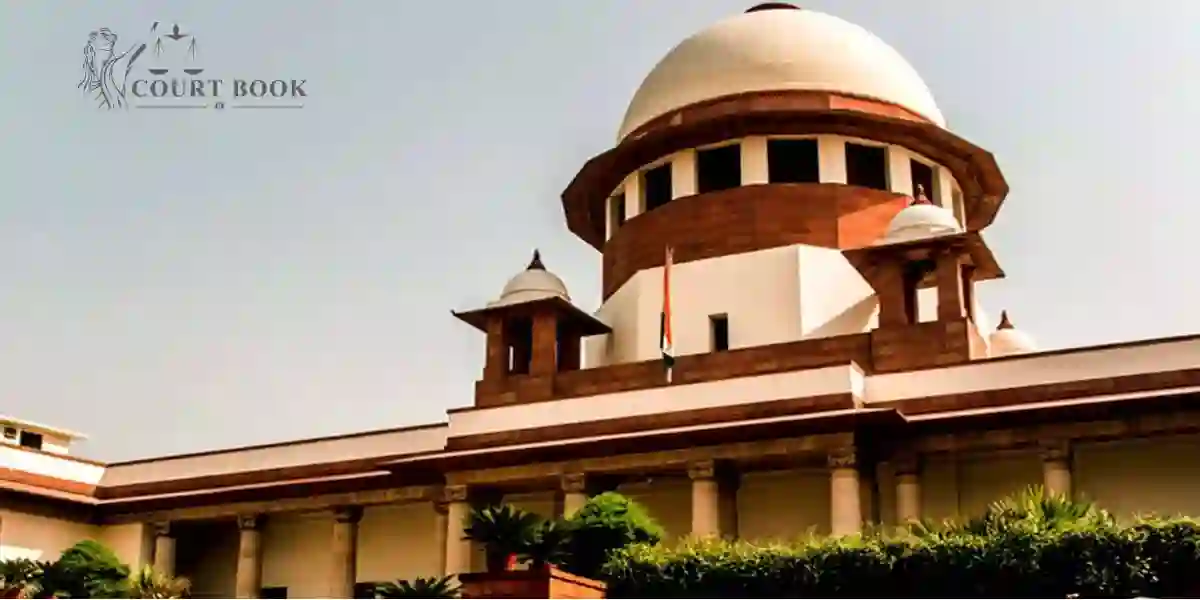
The Supreme Court on March 10, 2026 restored the conviction of an Income Tax Inspector caught in a Central Bureau of Investigation (CBI) trap for accepting a bribe during an assessment proceeding. While the Court found no evidence of a criminal conspiracy involving a senior officer, it held that the inspector’s demand and acceptance of illegal gratification had been clearly established during trial.
A Bench of Justice Sanjay Kumar and Justice K. Vinod Chandran partly allowed the CBI’s appeal and set aside the High Court’s acquittal of the inspector. The Court reinstated the conviction under the Prevention of Corruption Act but reduced the sentence from four years to one year of rigorous imprisonment.
Read also:-Chhattisgarh High Court Quashes Criminal Complaint Against Judges, Says Allegations Based
Background of the Case
The case arose from a complaint made by a partner of a firm whose income tax assessment for the year 2008–09 was pending before the department. According to the complaint, the partner approached the office to finalize the assessment when an Income Tax Inspector allegedly demanded ₹5 lakh as a bribe on behalf of the assessing officer.
The complainant later approached the CBI, following which a trap operation was arranged. The investigation team prepared marked currency notes coated with phenolphthalein powder and sent the complainant to deliver the money.
During the operation, the complainant handed over ₹2 lakh to the inspector inside the Income Tax office. Soon after the pre-arranged signal was given, the CBI team entered and recovered the marked cash from the inspector’s coat pocket. Chemical tests conducted on his hands and clothing turned the solution pink, indicating contact with the treated currency notes.
Read also:-Supreme Court Grants Anticipatory Bail To Folk Singer Neha Singh Rathore In FIR Over Posts On PM
Trial Court Conviction and High Court Acquittal
After trial, the special court convicted both the Joint Commissioner of Income Tax and the Inspector for criminal conspiracy and for offences under Section 7 of the Prevention of Corruption Act. Each was sentenced to four years of rigorous imprisonment along with a fine.
However, the High Court later overturned the conviction. It held that the prosecution had failed to prove the existence of a conspiracy between the two officers and also questioned whether the demand for a bribe had been established beyond reasonable doubt.
The CBI challenged this decision before the Supreme Court.
Supreme Court’s Examination of Evidence
The Supreme Court carefully reviewed the testimony of the complainant and other witnesses involved in the trap operation.
The Bench noted that while there were inconsistencies regarding an earlier alleged demand made months before the trap, the demand made by the inspector shortly before the trap had been clearly testified by the complainant.
“The demand made by the inspector on 27 December 2010 was spoken to by the complainant and stands corroborated by the trap laying officer,” the Court observed.
The Court also relied on the recovery of the marked currency notes and the chemical test results showing traces of phenolphthalein on the inspector’s hands and clothing.
Independent witnesses who were present during the trap proceedings confirmed the recovery of the envelope containing the marked notes from the inspector’s coat pocket. These circumstances, the Court said, strongly supported the prosecution’s version.
Read also:-Kerala High Court Quashes Ombudsman Proceedings Against Village Officer, Says He Is Not
No Proof of Conspiracy Against Senior Officer
At the same time, the Court agreed with the High Court that the evidence did not establish any criminal conspiracy involving the senior officer who was the assessing authority.
There was no proof that the officer had personally demanded a bribe or that the demand made by the inspector had occurred in his presence.
“The culpability of the senior officer was not established since there was neither proof of demand nor acceptance by him,” the Bench noted.
Because of this, the Court declined to restore the conspiracy charge.
Read also:-Himachal Pradesh High Court Upholds Termination of Power Board Worker Over Matric Certificate from
Court’s Decision
The Supreme Court held that the inspector’s individual liability under Section 7 of the Prevention of Corruption Act had been clearly proved through witness testimony, recovery of the marked money, and corroborating evidence.
Setting aside the High Court’s acquittal, the Court restored the trial court’s finding of guilt against the inspector.
However, considering the age of the accused, the Bench reduced the sentence from four years to one year of rigorous imprisonment while maintaining the fine of ₹1 lakh. The Court directed the accused to surrender within four weeks.
Case Title: Central Bureau of Investigation v. Baljeet Singh
Case No.: Criminal Appeal arising out of SLP (Crl.) No.12486 of 2025
Decision Date: 10 March 2026
Download Judgment

