

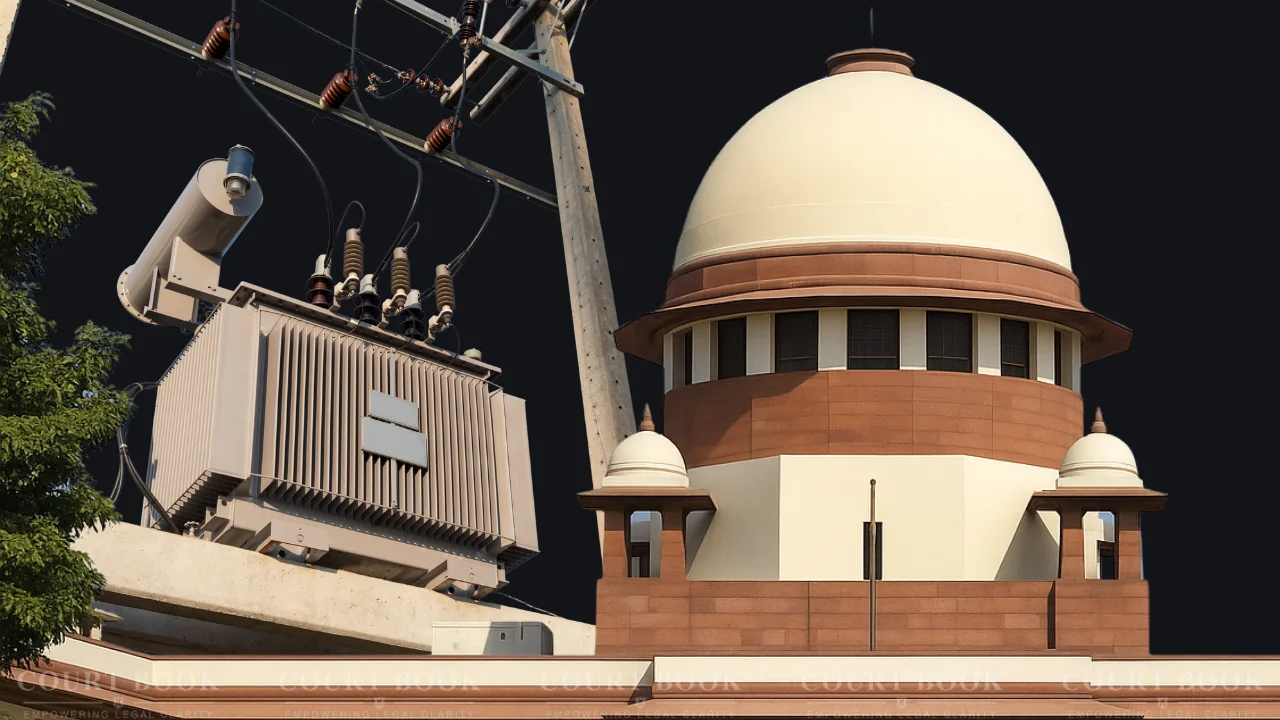
The Supreme Court has ruled in favour of directly recruited Assistant Engineers in a long-running dispute over seniority within the Tamil Nadu Electricity Board. The Court clarified that the seniority of direct recruits must be counted from the date they first joined service, even if they were undergoing training at the time.
The judgment resolved a conflict between direct recruits and internally selected engineers regarding their relative seniority in the cadre.
Read also:-Chhattisgarh High Court Quashes Criminal Complaint Against Judges, Says Allegations Based
Background of the Case
The dispute arose from the recruitment process for the post of Assistant Engineer (Electrical) in the Tamil Nadu Electricity Board. The Board followed a dual recruitment system - one through direct recruitment and another through internal selection from existing employees.
In December 2000, around 200 Assistant Engineers were recruited directly, followed by another batch of 100 recruits in March 2001. These candidates were initially appointed as trainees and required to undergo training.
Later, in May 2002, internally selected candidates were promoted to the same post. The disagreement began when questions arose about how seniority should be calculated between these two groups.
Internal candidates argued that the seniority of direct recruits should be counted only after their probation began. They also challenged a Board decision that reduced the training period for direct recruits from two years to three months.
Multiple writ petitions were filed before the Madras High Court, leading to years of litigation.
Read also:-Supreme Court Grants Anticipatory Bail To Folk Singer Neha Singh Rathore In FIR Over Posts On PM
High Court’s Decision
A Single Judge of the High Court initially dismissed the petitions filed by the internally selected candidates, holding that direct recruits were entitled to seniority from the date of their initial appointment.
However, the Division Bench later reversed this decision. It ruled that direct recruits could be treated as regular Assistant Engineers only after their probation began.
Based on this interpretation, the High Court directed the Board to redraw the seniority list by treating both groups as having been appointed in 2002. This meant that the direct recruits who had joined earlier could lose their seniority advantage.
Arguments Before the Supreme Court
Counsel for the Tamil Nadu Electricity Board and the direct recruits argued that the High Court had misunderstood the applicable service regulations.
Read also:-Kerala High Court Quashes Ombudsman Proceedings Against Village Officer, Says He Is Not
They relied on provisions of the Tamil Nadu Electricity Board Service Regulations, 1967, which define “duty” to include training and probation. According to them, once a candidate joins service and begins training prescribed for the post, they are already considered to be on duty.
It was further argued that seniority should be determined based on the candidate’s position in the approved list prepared at the time of recruitment, not from the date probation begins.
On the other hand, the internally selected candidates contended that employees enter the cadre only when their probation starts. They maintained that the reduction of the training period for direct recruits affected their own seniority and should not have been applied retrospectively.
Court’s Observations
The Supreme Court examined the relevant service regulations and concluded that the High Court’s interpretation was incorrect.
Read also:-Himachal Pradesh High Court Upholds Termination of Power Board Worker Over Matric Certificate from
The bench explained that the regulations clearly state that a person is considered to be on duty not only while performing job functions but also while undergoing training or probation prescribed for the post.
“The period of training is a part of service which is imparted after an incumbent joins duty,” the Court observed.
The Court also noted that the regulations do not provide that seniority should be counted only from the date probation begins. Instead, seniority is linked to the merit position in the list of approved candidates prepared during recruitment.
The judges further clarified that merely because trainees receive consolidated pay during training and regular pay during probation does not change their status as members of the service.
Read also:-Supreme Court: Salary of PSU Employees Cannot Decide OBC Creamy Layer Status; 2004 Clarificatio
Supreme Court’s Decision
Allowing the appeals, the Supreme Court set aside the judgment of the Division Bench of the Madras High Court.
The Court held that the seniority of directly recruited Assistant Engineers must be counted from the date they first joined service, even if they were undergoing training at that time.
The bench concluded that the High Court had erred in holding that seniority should begin only from the date probation commenced.
With this ruling, the appeals filed by the Tamil Nadu Electricity Board and the direct recruits were allowed, and the High Court’s decision directing a revised seniority list was overturned.
Case Title: M. Thanigivelu & Ors. v. Tamil Nadu Electricity Board & Ors.
Case No.: Civil Appeal No. 862 of 2026 (with connected appeals)
Decision Date: 11 March 2026
Download Judgment

