

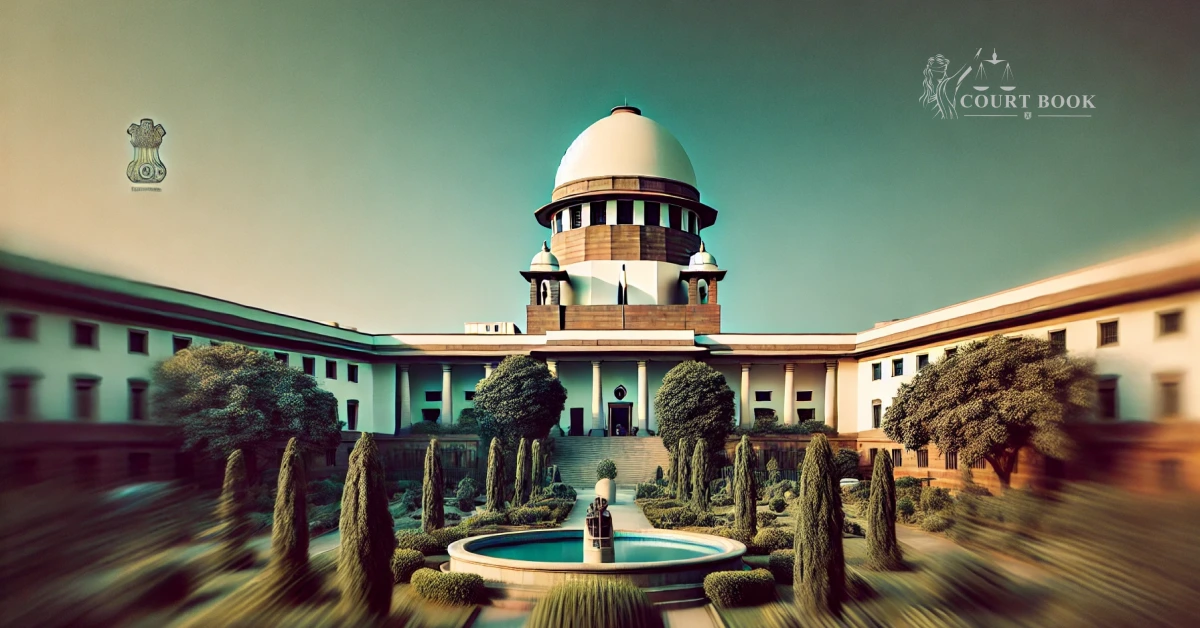
In a packed Court No. 7 on Tuesday morning, the Supreme Court delivered a firm message about delays in insolvency proceedings, refusing to bail out a private buyer who missed multiple payment deadlines while attempting to purchase Surana Industries’ Raichur plant. The bench of Justice Sanjay Kumar and Justice Alok Aradhe dismissed the appeals filed by Shri Karshni Alloys Pvt. Ltd., effectively sealing the forfeiture of ₹37.8 crore already deposited by the company. The courtroom atmosphere was tense; several lawyers murmured to each other as the bench read out portions of its reasoning, emphasising that time is “a crucial facet” of the IBC process.
हिंदी में पढ़ें
Background
Surana Industries went into liquidation in 2018, with assets in Tamil Nadu and Karnataka. Multiple auctions failed to attract buyers, especially for the Raichur plant, whose value had steadily fallen over the years. Stakeholders finally agreed that if necessary, the asset would be sold at scrap value-around ₹50 crore.
Read also:-Allahabad High Court Flags Faulty Trap Procedures While Granting Bail to Labour Officer Accused
Just then, in September 2021, Shri Karshni Alloys entered the scene with a surprisingly high offer of ₹105.21 crore, committing to pay the remaining amount within 15 days of NCLT approval. That commitment later became the centre of the dispute.
The NCLT approved the sale in March 2022, but by then the appellant claimed that market conditions had worsened and funds couldn’t be arranged on time. Extensions were sought and partially granted, but the deadlines were repeatedly missed. Eventually, the liquidator invoked the NCLT-approved condition that any deviation would lead to forfeiture of the entire amount paid.
When the NCLT upheld the forfeiture, and the NCLAT (majority) did the same, the appellant approached the Supreme Court.
Read also:-Supreme Court stays Allahabad High Court order in sensitive POCSO matter, questions absence
Court’s Observations
The bench took a dim view of the appellant’s conduct, noting inconsistencies and what it called “clandestine” litigation behaviour.
The judges pointed out that the company had not only sought extensions, but had acted on them, even making two additional payments after the NCLT’s strict order. “The bench observed, ‘Having accepted the extended timeline and acted upon it, the appellant cannot now turn around and challenge the very condition attached to that extension.’”
The Court also highlighted that the sale was not a private contract governed by the Indian Contract Act. It was a regulated sale under Regulation 33(2)(d) of the Liquidation Regulations, meaning the NCLT had the authority to impose timelines and forfeiture conditions.
Another important factor was that the appellant filed a writ petition in the Madras High Court while concealing the fact that it had already filed an NCLAT appeal. The Supreme Court felt this alone was enough to deny equitable relief. The judges remarked that such conduct “reflected lack of bona fides.”
Read also:-Delhi High Court Grills Centre Over Indigo Flight Chaos, Demands Clear Accountability and Swift
Further, even though the asset was later sold for ₹145.38 crore, the Court refused to treat the forfeiture as unjust enrichment. Financial creditors, it noted, still suffered massive haircuts.
Decision
After reviewing all factual and legal aspects, the Court upheld the NCLAT majority view and dismissed the appeals in full. “On the above analysis, be it viewed from any angle, we find no merit in the contentions of the appellant,” the judgment stated, ending the matter decisively. The forfeiture of ₹37.8 crore therefore stands, and the Court refused to interfere with the liquidation process any further.
Case Title: M/s Shri Karshni Alloys Private Limited vs. Ramakrishnan Sadasivan (Liquidator of Surana Industries Ltd.)
Case No.: Civil Appeal Nos. 3625–3628 of 2025
Case Type: Civil Appeal under Section 62 of the Insolvency and Bankruptcy Code (IBC)
Decision Date: December 10, 2025
Download Judgment

