

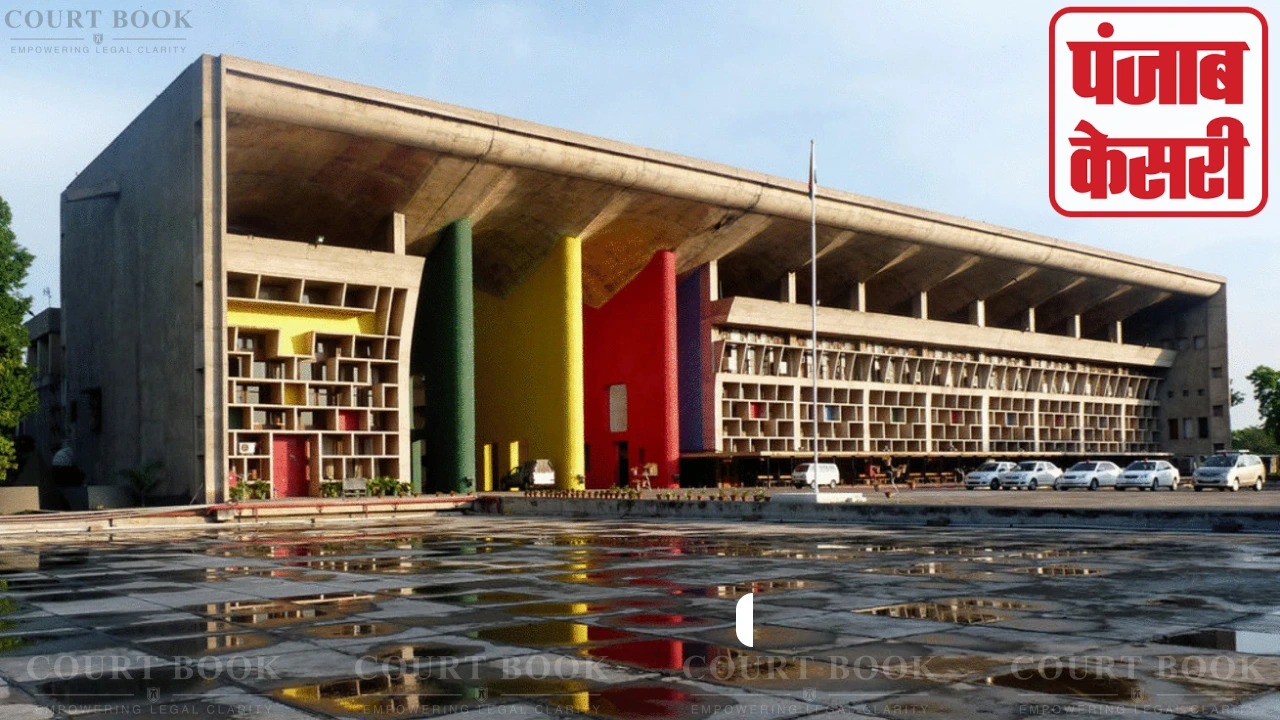
The Punjab and Haryana High Court on Friday declined to interfere with the Punjab Pollution Control Board’s emergency order that led to the closure of a Jalandhar hotel and disconnection of its electricity supply. The court ruled that the hotel must pursue its remedy before the National Green Tribunal (NGT), holding that the Pollution Control Board had acted within its legal powers under the Water (Prevention and Control of Pollution) Act, 1974
A Division Bench led by Chief Justice Sheel Nagu and Justice Sanjiv Berry disposed of the writ petition filed by The Hind Samachar Limited and another, without examining the merits of the pollution allegations.
Background of the Case
The dispute arose after the Punjab Pollution Control Board conducted an inspection on 13 January 2026 at a hotel operating from Project Park Plaza in Civil Lines, Jalandhar. The inspection report pointed to multiple lapses, including non-operation of sewage and effluent treatment plants, bypassing untreated wastewater into municipal sewers, lack of approvals, and improper handling of hazardous waste.
Read also:- PMLA Case Collapses: Mumbai Court Discharges Chhagan Bhujbal After Predicate Offences Fall Apart
Based on these findings, the Board invoked its emergency powers and issued a notice directing disconnection of electricity supply, followed by an order enforcing the disconnection on 14 January 2026.
Challenging these actions, the petitioners approached the High Court under Articles 226 and 227 of the Constitution, arguing that the orders were passed without a show-cause notice or prior hearing.
Arguments by the Petitioners
Senior counsel for the petitioners contended that the action was arbitrary and violated principles of natural justice. It was argued that:
• No opportunity of hearing was granted before closure and power disconnection.
• The order was non-speaking and reasons were supplied only later.
• If given time, the hotel could have rectified the deficiencies.
Reliance was placed on earlier judgments, including a Supreme Court ruling in the Sterlite Industries case, to argue that writ jurisdiction could still be exercised despite alternative remedies.
Read also:- Habeas Corpus Allowed: Allahabad HC Quashes Arrest for Violating BNSS and Article 22
Stand of the State and Pollution Board
The State of Punjab and the Pollution Control Board raised a preliminary objection on maintainability. They argued that the Water Act itself provides a statutory remedy before the National Green Tribunal under Section 33B.
The Board maintained that the inspection revealed serious violations posing a risk of water pollution, justifying immediate action under Sections 32 and 33A of the Water Act, which allow closure and stoppage of electricity in urgent situations.
Court’s Observations
After examining the statutory framework, the Bench noted that the Water Act specifically empowers pollution control authorities to act swiftly when environmental harm is imminent.
“The Board is empowered, in an emergent situation, to close down operations and disconnect electricity without prior hearing, provided reasons are recorded in writing,” the court observed.
Rejecting the plea of denial of natural justice, the Bench held that granting a prior hearing in such cases could defeat the very purpose of emergency powers. The judges also clarified that the law requires recording of reasons, not their prior communication to the affected party.
On precedents cited by the petitioners, the court distinguished them on facts, noting that the present case involved only water pollution issues and fell squarely within the Water Act.
Effect of Supreme Court’s Interim Order
During the proceedings, the Bench was informed of an interim order passed by the Supreme Court on 20 January 2026 in a connected matter involving the publication of Punjab Kesari. The apex court had allowed the newspaper’s printing operations to continue, while maintaining status quo regarding other commercial establishments, including the hotel.
Read also:- Copyright Battle Over Narayan Debnath Works: Calcutta HC Upholds Interim Ban on Publisher
Taking note of this, the High Court continued the status quo for the hotel for one week from the date of its judgment, to enable the petitioners to approach the appropriate forum.
Final Decision
Concluding the matter, the High Court upheld the preliminary objection raised by the respondents. It ruled that the petitioners must avail the alternative statutory remedy before the National Green Tribunal under the Water Act.
“Consequently, the petition stands disposed of without commenting upon the merits,” the Bench held, making it clear that no final opinion had been expressed on the alleged violations.
Case Title: The Hind Samachar Limited & Another vs State of Punjab & Others
Case Number: CWP-940-2026 (O&M)
Date Pronounced: 23 January 2026
Download Order

