

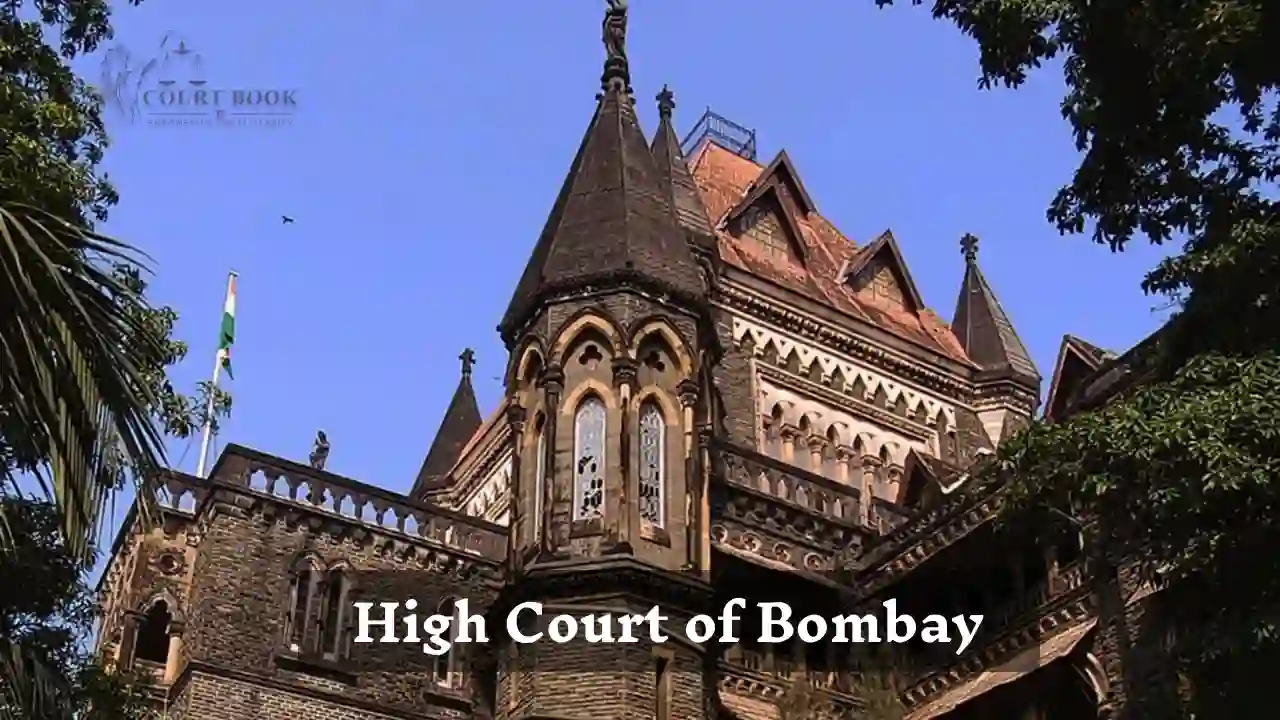
In a significant ruling on the Maharashtra Money Lending law, the Bombay High Court has refused to throw out a high-stakes commercial suit seeking recovery of over ₹510 crore.
Justice Gauri Godse held that whether the lender was an unlicensed “money lender” cannot be decided at the preliminary stage and must go to trial.
Read also:-Bombay High Court Allows Single Mother to Change Daughter’s Name, Caste in School Records
The decision came in an interim application filed in a commercial dispute between real estate players over alleged unpaid loans backed by cheques and promissory notes.
Background of the Case
The dispute arises out of a commercial suit filed by Ashok Commercial Enterprises against Hubtown Limited for recovery of large sums allegedly advanced between 2011 and 2018.
According to the plaint, the lender initially advanced around ₹48 crore, which later increased to approximately ₹510 crore. The money was allegedly given at interest rates going up to 36% per annum.
The borrower is said to have issued post-dated cheques and executed demand promissory notes acknowledging the debt. However, when the cheques were presented in April 2018, they were dishonoured due to “insufficient funds.”
A criminal complaint under the Negotiable Instruments Act was also filed. Alongside that, the lender approached the High Court seeking recovery of the principal and interest.
Read also:-Rajasthan High Court Refuses Relief to New Nursing Colleges, Says Counselling Cannot Be Reopened
The Defendant’s Objection: “Suit is Barred”
Hubtown Limited sought rejection of the plaint under Order VII Rule 11 of the Civil Procedure Code.
Its central argument: the suit is barred by Section 13 of the Maharashtra Money Lending (Regulation) Act, 2014.
Under this provision, courts cannot pass a decree in favour of a money lender unless the lender held a valid licence at the time of advancing the loan.
Senior counsel for the defendant argued that the plaintiff was clearly engaged in the business of money lending, had charged high interest, and had not pleaded possession of a licence.
“It is a classic case of clever drafting to avoid the statutory bar,” the defence contended.
They also argued that advances made on promissory notes do not fall within the statutory exceptions and therefore require licensing.
Read also:-Jharkhand HC Seeks Answers on 437 Custodial Deaths, Orders Home Secretary to Clarify Judicial
Plaintiff’s Stand: “This Is Not a Barred Loan”
The plaintiff countered that the suit is based on dishonoured cheques and promissory notes, and that certain types of advances are excluded from the definition of “loan” under Section 2(13)(j) of the Act.
According to the plaintiff, advances exceeding ₹3 lakh made on the basis of negotiable instruments (other than promissory notes) are not treated as “loans” under the Act. Therefore, the licensing requirement and the bar under Section 13 would not apply.
The plaintiff relied on earlier Bombay High Court rulings, including the Division Bench judgment in Deepak Raheja v. Tikamdas & Associates, to argue that the issue cannot be decided without examining evidence.
Read also:-Karnataka High Court Cuts Jail Term in ATM Cloning Case, Enhances Fine to ₹2 Lakh Each
Court’s Observations
After reviewing the pleadings and documents, Justice Godse noted that the suit is indeed founded on dishonoured cheques and promissory notes.
The Court referred to prior rulings explaining that:
• The bar under Section 13 applies only if there is a “loan” as defined in the Act.
• Whether a person is truly carrying on the “business of money lending” requires factual examination.
• Merely advancing money does not automatically make someone a money lender.
Quoting from earlier precedent, the Court observed in essence:
“Without a loan as defined under the Act being involved, there is no bar on any court to pass a decree.”
The judge stressed that rejecting a plaint at the threshold is a “drastic measure” and must be exercised strictly within the limits of Order VII Rule 11.
Importantly, the Court held that determining whether the plaintiff falls within the statutory definition of a money lender would require evidence and cannot be concluded merely from pleadings.
Why the Court Refused to Reject the Suit
The Court found that:
• It cannot be conclusively determined at this stage whether the transactions fall within the statutory definition of “loan.”
• The burden of establishing that the plaintiff is engaged in the business of money lending lies on the defendant.
• The applicability of the statutory bar requires detailed factual inquiry.
Therefore, the issue “warrants a trial” and cannot be decided summarily.
Read also:-MP High Court Dismisses Plea of Compulsorily Retired Head Constable, Says Mercy Order Cannot
The Decision
Rejecting the interim application, Justice Gauri Godse concluded that the plaint cannot be thrown out at the preliminary stage.
“The plaint cannot be rejected at the threshold,” the Court held, dismissing the defendant’s application.
The commercial suit will now proceed on merits.
Case Title: Hubtown Limited v. Ashok Commercial Enterprises
Case No.: Interim Application (L) No. 27175 of 2021 in Commercial Suit No. 1532 of 2018
Decision Date: 21 January 2026


