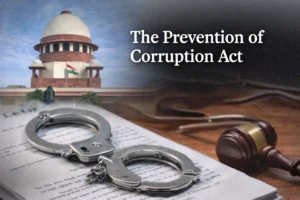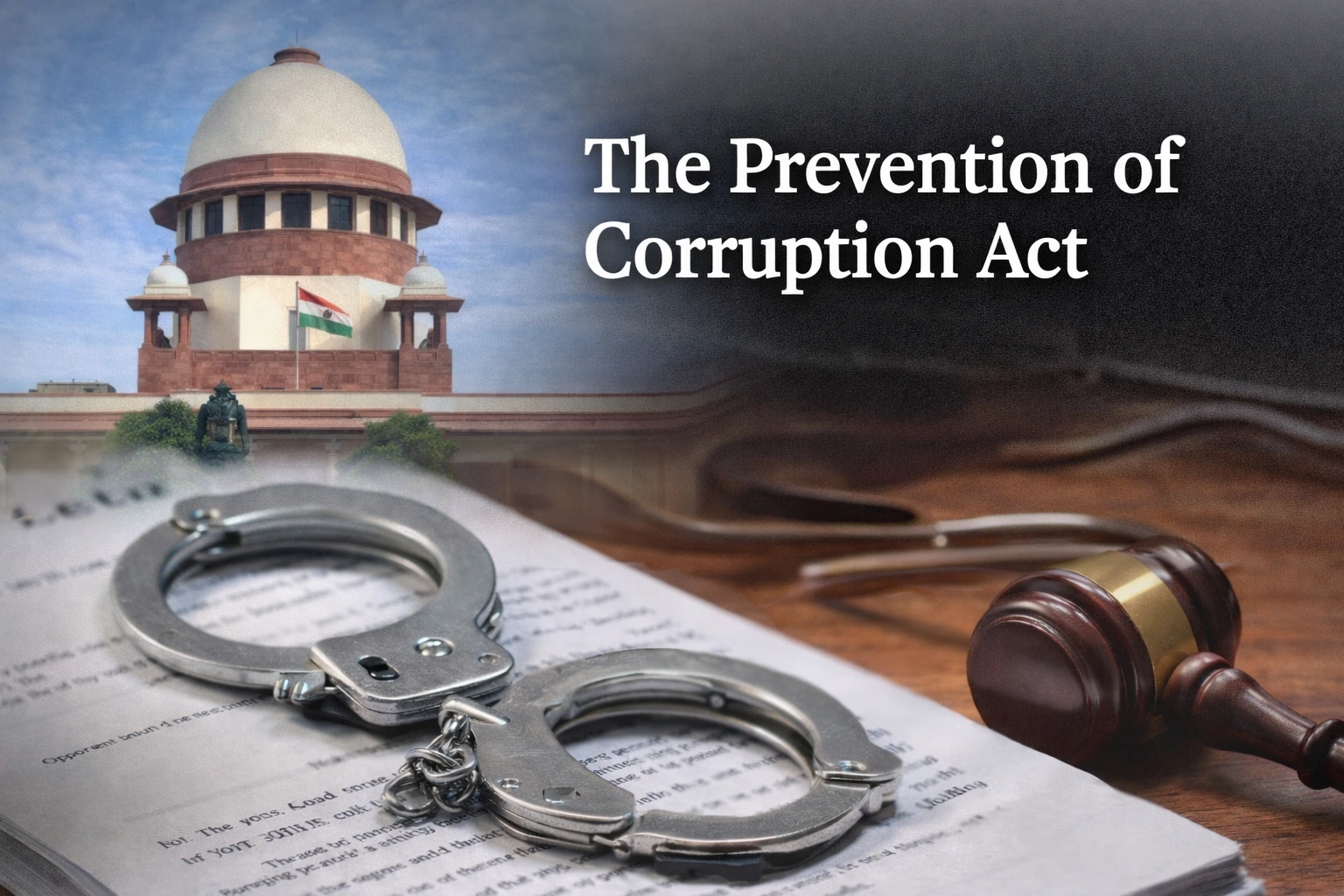
The Supreme Court has upheld the constitutional validity of Section 17A of the Prevention of Corruption Act, a provision that requires prior government approval before investigating certain decisions taken by public servants in the course of their official duties.
The ruling came in a long-pending writ petition filed by the Centre for Public Interest Litigation (CPIL), which had argued that Section 17A shields corrupt officials and revives a system earlier struck down by the Court. A Bench led by Justice K.V. Viswanathan and Justice B.V. Nagarathna rejected the challenge, holding that the provision strikes a careful balance between protecting honest decision-making and allowing corruption investigations to continue.
Why Section 17A Was Challenged
Section 17A was introduced in 2018 and bars police officers from starting any enquiry, inquiry, or investigation against a public servant for actions linked to official recommendations or decisions, unless prior approval is obtained from the competent authority.
The petitioner contended that this requirement violated Articles 14 and 21 of the Constitution, arguing it gave the government the power to block corruption probes at the threshold. Senior advocate Prashant Bhushan, appearing for CPIL, told the Court that the provision was “nothing but a re-incarnation” of earlier safeguards that had been struck down in the landmark Vineet Narain and Subramanian Swamy judgments.
He pointed to data showing that a significant number of investigation requests were rejected and warned of “arbitrariness and political shielding.”
Government Defends the Law
Defending the provision, Solicitor General Tushar Mehta argued that Section 17A was designed to protect honest officers from harassment for bona fide decisions.
He stressed that governance would suffer if officers constantly feared criminal action for policy decisions taken years earlier.
“Before a public servant is publicly charged, there must be some responsible preliminary scrutiny,” the government submitted.
The Centre also highlighted built-in safeguards, including time limits for granting approval and an exception for on-the-spot arrests in bribery cases.
Court Draws Line Between Decisions and Bribery
In its detailed judgment, the Court acknowledged the dangers of over-protection but refused to equate Section 17A with the earlier invalid provisions.
The Bench observed that unlike the old Section 6A of the DSPE Act, which applied only to senior officers, Section 17A applies uniformly to all public servants and is narrowly limited to acts “relatable to recommendations or decisions” taken in official capacity.
“The law does not grant immunity for corruption,” the Court observed, adding that cases involving direct bribery, trap operations, or illegal gratification are outside the protection of Section 17A.
Emphasis on Fearless Decision-Making
A key theme running through the judgment was the need to protect civil servants who take tough administrative calls.
The Bench recalled earlier rulings warning that unchecked criminal scrutiny could lead to “policy paralysis”, where officers avoid taking decisions altogether. Quoting past precedents, the Court noted that even a baseless FIR can cause “incalculable harm” to an officer’s reputation and to governance itself.
As the Court put it, “Great caution must be exercised before criminal law is set in motion against decisions taken in good faith.”
Concerns Over Screening Mechanism Acknowledged
At the same time, the Court did not ignore the petitioner’s concerns. It noted that the existing Standard Operating Procedure (SOP) for granting approval does not involve any independent screening body.
The Bench made it clear that mere executive control without fair scrutiny would be problematic, but held that the possibility of misuse alone cannot make a law unconstitutional.
“The Constitution does not require the Court to throw the baby out with the bathwater,” the judgment remarked.
Final Word from the Court
Ultimately, the Supreme Court held that Section 17A serves a legitimate purpose and does not violate constitutional guarantees.
While stressing that corruption must be investigated fearlessly, the Bench concluded that honest officers deserve protection from vexatious proceedings for bona fide decisions.
The writ petition was dismissed, but the Court left the door open for judicial review in individual cases where approval is wrongly granted or denied.
Case Title: Centre for Public Interest Litigation v. Union of India
Case Number: Writ Petition (Civil) No. 1373 of 2018
Download Judgment



-300x169.webp)
-300x169.webp)