

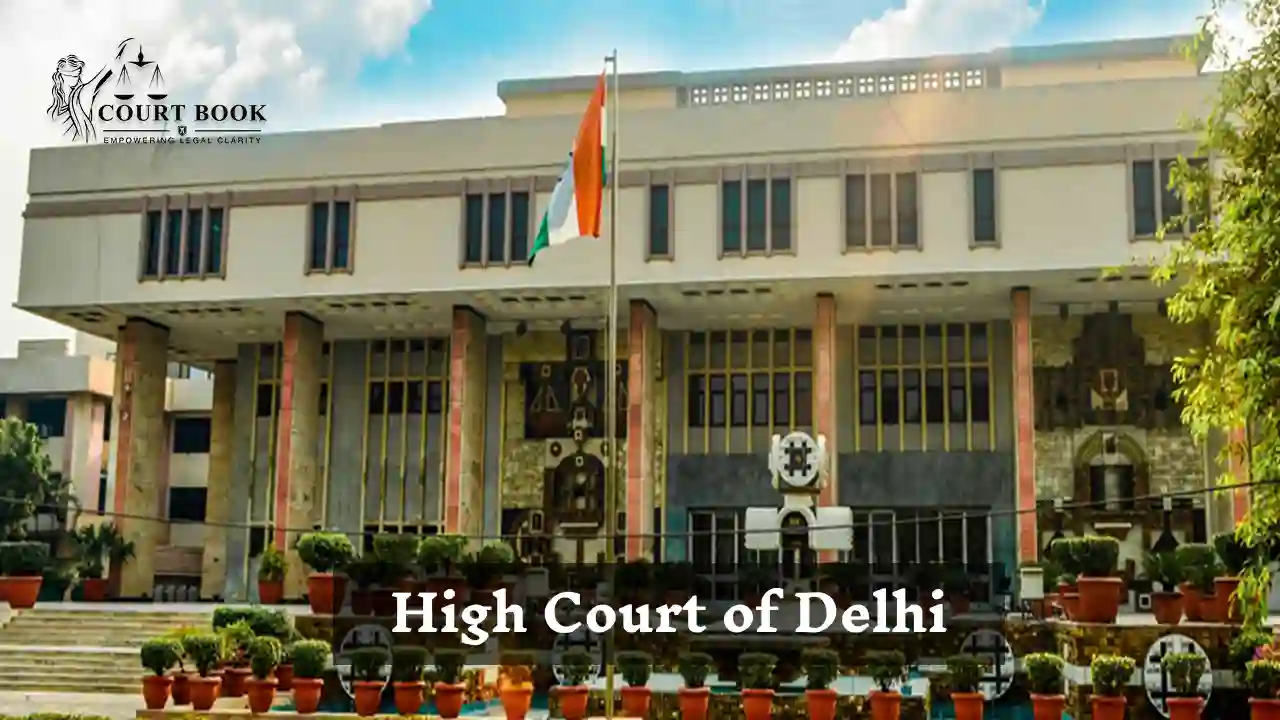
In a significant ruling on service law and administrative control, the Delhi High Court has clarified that the Ministry of Home Affairs (MHA) is legally competent to initiate disciplinary proceedings against IAS officers of the AGMUT cadre.
The decision came while hearing a batch of petitions led by Union of India vs Padma Jaiswal & connected matters, where the core issue revolved around who holds disciplinary authority over officers serving in multiple states and Union Territories.
Background of the Case
The dispute arose after disciplinary proceedings were initiated by the MHA against IAS officers belonging to the AGMUT cadre, including a 2003-batch officer posted in Arunachal Pradesh.
The officer challenged the action before the Central Administrative Tribunal (CAT), arguing that only the concerned State Government where the officer was serving could initiate such proceedings.
The Tribunal accepted this argument and set aside the proceedings, holding that the MHA lacked jurisdiction. This led the Union of India to approach the High Court.
The central question before the Court was:
Can the Ministry of Home Affairs, acting on behalf of the Joint Cadre Authority (JCA), legally initiate and conclude disciplinary proceedings against AGMUT cadre IAS officers?
The Bench of Justice Anil Kshetrapal and Justice Amit Mahajan undertook a detailed examination of the statutory framework governing All India Services.
The Court noted that the AGMUT cadre is a joint cadre, comprising multiple states and Union Territories, and therefore cannot be governed by the authority of a single state alone.
“The statutory scheme clearly contemplates collective decision-making in case of a joint cadre,” the Bench observed.
Importantly, the Court held that:
• The Joint Cadre Authority (JCA) represents the collective will of all constituent states.
• The law permits nomination of one authority to act on behalf of all.
• The MHA, being part of this structure, functions as a coordinating authority, not an external delegate.
Rejecting the Tribunal’s reasoning, the Court said that limiting disciplinary power only to the state where the officer was posted would “defeat the very concept of a joint cadre.”
Addressing the argument that MHA’s role amounted to illegal delegation, the Court clarified that this was not a case of sub-delegation.
“The arrangement is one of structured authorisation within the statutory framework,” the Bench noted, emphasizing that the rules themselves allow such representation.
The Court further stated that the 1989 decision authorising MHA to handle vigilance and disciplinary matters was consistent with the legal scheme, not contrary to it.
Read also:- Himachal Pradesh HC Orders Equal Land Compensation for Co-Owners, Rejects Technical Denial
The High Court disagreed with the Tribunal’s conclusion that:
• JCA lacks disciplinary powers, and
• MHA cannot act as disciplinary authority.
It held that these findings were based on an unduly narrow reading of the rules and failed to consider the broader statutory structure governing joint cadres.
Setting aside the Tribunal’s orders, the Delhi High Court held that:
• The Ministry of Home Affairs is competent in law to initiate and conclude disciplinary proceedings against IAS officers of the AGMUT cadre.
• The disciplinary actions taken under this framework are legally valid and do not suffer from lack of jurisdiction.
The petitions filed by the Union of India were accordingly allowed.
Case Details
Case Title: Union of India & Ors vs Padma Jaiswal IAS & connected matters
Case Number: W.P.(C) 6699/2018 & connected petitions
Judge: Justice Anil Kshetrapal, Justice Amit Mahajan
Decision Date: 01 April 2026
Counsels:
• For Petitioners: Sr. Adv. Sanjay Jain and team
• For Respondents: Sr. Adv. Nidhesh Gupta and others
Download Judgment

