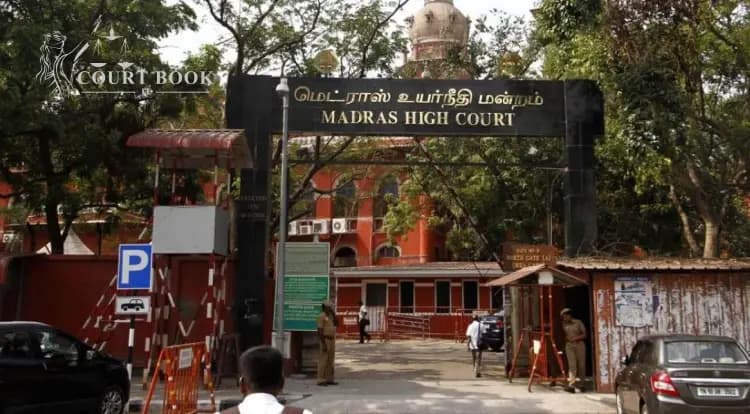
In a hearing that moved at a surprisingly candid pace, the Madras High Court on Thursday issued a set of practical, almost ground-level directions aimed at clearing the heaps of unused mobile phones lying in court property rooms and improving public awareness on accident compensation. Justice D. Bharatha Chakravarthy delivered the order in a suo motu case, noting that essential rights often remain “buried under procedure.”
Background
The bench said it noticed two persistent issues while disposing of several criminal matters recently. One-courts across Tamil Nadu are overflowing with recovered mobile phones that nobody comes back to claim. Two-families of road accident victims, especially in rural belts, were shockingly unaware that they could seek compensation from the Motor Accident Claims Tribunal.
During an informal discussion with officials of the Tamil Nadu State Legal Services Authority (TNSLSA), the court realised that even simple rights were inaccessible because ordinary citizens either lacked awareness or found the procedural burden too heavy.
Court’s Observations
Justice Chakravarthy spoke directly about the lived reality of mobile-theft cases. Many victims lose their phones while travelling, buy a new device, and simply move on with life. Returning to court for the old phone often costs more-travel, missed wages, and a day spent waiting in court corridors. “What remains in the property rooms is basically e-waste,” the judge noted, calling it an avoidable burden on both citizens and the judicial system.
The bench observed, “Victims must not be forced into unnecessary hardship merely to retrieve low-value belongings. A simple email-based system can resolve this.”
Read also: Supreme Court Restores Seniority Rights of PSEB Employee After Nearly Five-Decade Legal Battle
On accident cases, the court expressed genuine shock. In several hearings, dependents of deceased victims told the bench they had no idea they were entitled to compensation. “Contrary to public perception, claims are not made in all accidents,” the judge remarked, hinting at a deep deficit in legal outreach.
To the court, this was unacceptable. It stressed that awareness must be created, especially in rural and backward regions where legal literacy remains thin.
Decision
In its final order, the High Court directed:
- A new email-based system for returning seized mobile phones
- Victims can email the District Legal Services Authority (DLSA) with case details and request courier return of their phones “as-is,” with no claims for possible transit damage.
- Investigating officers must verify identity through a phone call and a short video confirmation.
- Courts may pass return orders based on this verification.
- Courier costs can be met from DLSA funds, later reimbursable by the State.
Read also: Supreme Court Flags Serious Procedural Flaws, Sends Bihar Murder Case Back for Fresh Section 313
- Mandatory legal-awareness measures in accident cases
- Police officers must inform victims or their families about compensation rights.
- TNSLSA must promote awareness campaigns and ensure legal aid wherever necessary.
The order concludes with a clear message: simplifying access to justice is as important as delivering justice itself.
Article ends with the court’s decision/order
Case Title: Suo Motu vs. State of Tamil Nadu & Others
Case No.: W.P.(Crl.) No. 618 of 2025
Case Type: Suo Motu Criminal Writ Petition
Decision Date: 27 November 2025