

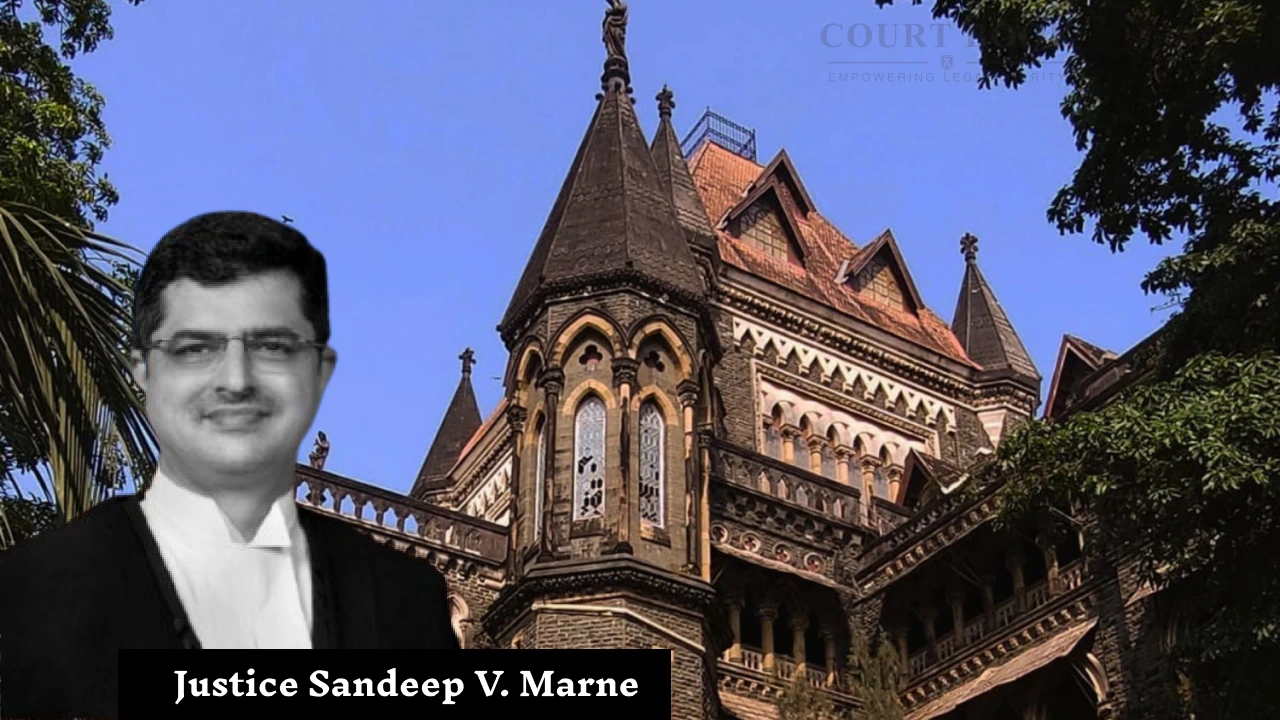
The Bombay High Court has refused to interfere with a Maharashtra government order restoring the registration of Krishna Kunj Co-operative Housing Society, holding that long-standing property ownership disputes and later developments cannot be used to cancel a society's registration decades after it was formed.
Justice Sandeep V. Marne dismissed a writ petition filed by Elite Diagnostic Center Pvt. Ltd., observing that proceedings for deregistration under the Maharashtra Co-operative Societies Act are limited in scope and cannot be converted into a forum for deciding land title disputes.
Background of the Case
Elite Diagnostic Center Pvt. Ltd. challenged an order dated 6 May 2026 passed by the Minister for Co-operation, which had overturned a decision of the Divisional Joint Registrar directing the deregistration of Krishna Kunj Co-operative Housing Society.
The society was registered on 23 March 1981. In 2024, the Divisional Joint Registrar accepted the company's plea under Section 21A of the Maharashtra Co-operative Societies Act, 1960, holding that the society had allegedly obtained registration through misrepresentation and ordered its deregistration.
The Minister later reversed that decision, prompting the company to approach the Bombay High Court.
Court Examines the Petitioner's Stand
At the very beginning of the judgment, the Court noted an unusual feature of the litigation.
The director of Elite Diagnostic Center Pvt. Ltd., Dr. Satish Sharma, was himself a member of the very housing society whose registration the company sought to cancel. He had earlier owned a flat in the building and continued to own a garage, on the basis of which he retained membership in the society.
The Court pointed out that the company argued garage owners could not legally be members of the society, yet its own director continued to enjoy membership through ownership of a garage.
As Justice Marne observed,
"The director of Petitioner thus purchased a garage, secured membership of the society and now claims that garage owners cannot become members of the society."
Scope of Deregistration Under Section 21A
The High Court explained that Section 21A permits deregistration only in limited situations, such as where registration was obtained through misrepresentation, the society's purpose has been exhausted, or other specific statutory grounds exist.
The Court stressed that a Joint Registrar cannot re-examine the correctness of the original registration as though hearing an appeal.
"The misrepresentation must be of such nature and degree that if not made, the society would not have been registered,"
the Court observed, adding that inaccurate or incomplete information alone is insufficient. Deliberate deception, suppression of material facts, or forged documents must be shown.
Property Disputes Not Relevant to Registration
The petitioner argued that the building stood on disputed land, that title litigation existed, that the building lacked a valid occupancy certificate, and that the society's application for deemed conveyance had been rejected.
However, the High Court found that almost all these events occurred after the society had already been registered in 1981.
According to the Court, later disputes over ownership, allegations regarding unauthorized construction, or subsequent proceedings relating to deemed conveyance cannot establish that the society obtained registration through misrepresentation decades earlier.
The Court also noted that the Registrar considering registration was not expected to decide questions relating to title over the property.
Elite Diagnostic Center further argued that only six flats existed when the society was registered and that four open spaces had been wrongly shown as garages merely to satisfy the statutory requirement of ten members.
The Court rejected this contention as well.
Justice Marne noted that the registration proposal itself clearly disclosed the existence of six flats and four garages. Therefore, there was no concealment or false statement before the Registrar.
Even if treating garage occupants as members was legally incorrect, the Court held that it would amount at most to an error by the Registrar and not a case of misrepresentation by the applicants. Such an issue could have been challenged through the statutory appellate remedy available at the relevant time, but not through deregistration proceedings decades later.
Court's Observations on Delay
The High Court also considered the extraordinary delay in seeking deregistration.
The society had functioned continuously for 45 years, while the application for deregistration was filed nearly 33 years after its registration.
The Court observed that the director of the petitioner company had actively participated in the management of the society as one of its office bearers during this period.
Justice Marne remarked that deregistering the society after so many years would unnecessarily disrupt the management of the residential building.
The Court further observed that the company's real objective appeared to be protection of its claimed title over the land, but that issue could not be decided through proceedings seeking cancellation of the society's registration.
Decision
Finding no illegality in the Minister's order restoring the society's registration, the Bombay High Court dismissed the writ petition.
The Court held that the essential requirement of proving misrepresentation at the time of registration had not been established and that proceedings under Section 21A could not be used to resolve ownership disputes or reopen a society's registration after several decades.
Accordingly, the writ petition was dismissed without any order as to costs.
Case Details:
Case Title: Elite Diagnostic Center Pvt. Ltd. v. Krishna Kunj Co-operative Housing Society Ltd. & Ors.
Case Number: Writ Petition No. 7855 of 2026
Judge: Justice Sandeep V. Marne
Decision Date: 2 July 2026


