

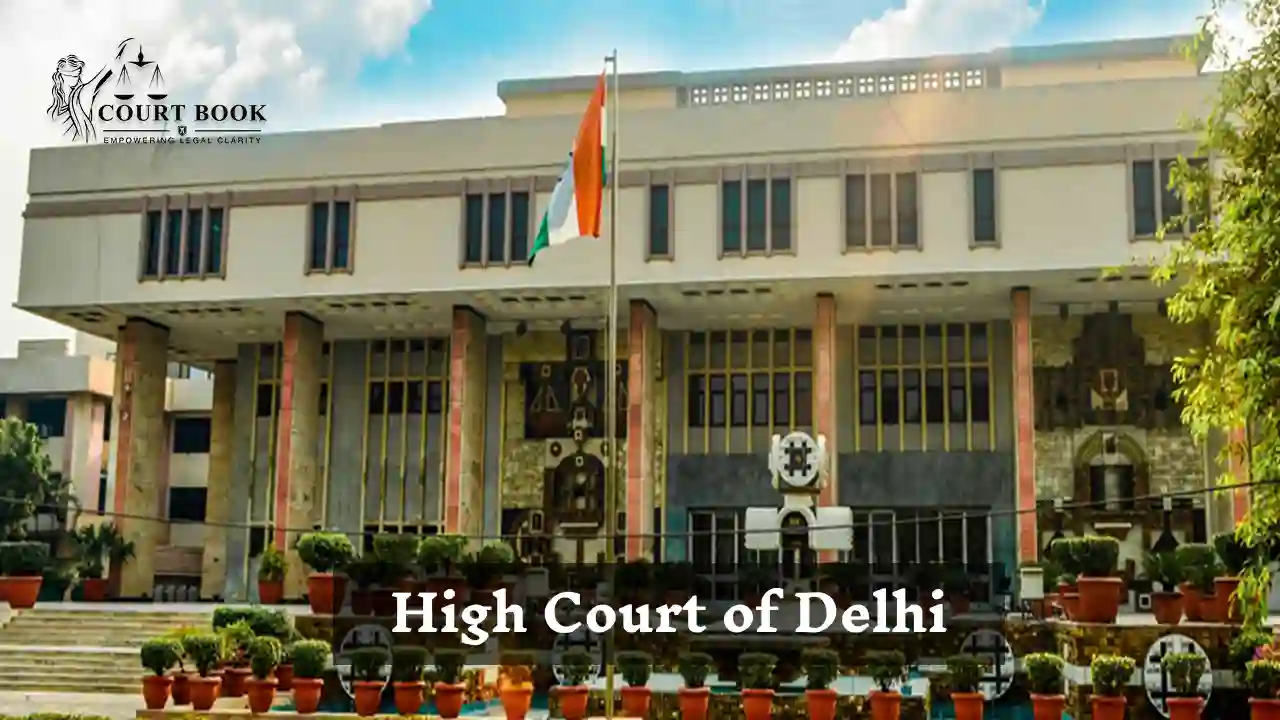
In a significant ruling, the Delhi High Court modified the conviction of a man accused in a dowry death case, holding that while harassment was proven, there was no clear evidence that he caused his wife’s death. The Court converted the charge from dowry death to abetment of suicide and reduced the sentence accordingly.
Background of the Case
The case dates back to 1999, when Sarvesh, the wife of appellant Veer Pal, died under suspicious circumstances after allegedly consuming poison. The prosecution’s case rested on allegations of dowry harassment.
According to the complaint filed by the deceased’s brother, the accused had demanded ₹50,000. Although ₹30,000 was paid, the remaining ₹20,000 allegedly became a source of continued harassment.
Read also:- Supreme Court Grants Divorce After 18-Year Separation, Sets Aside Foreign Decree in NRI Couple Dispute
The trial court convicted Veer Pal under Sections 498-A (cruelty) and 304-B (dowry death) of the IPC, sentencing him to seven years’ imprisonment.
Justice Vimal Kumar Yadav examined whether the essential ingredients of dowry death were satisfied. The Court acknowledged that harassment linked to dowry demand was clearly established through testimonies of the victim’s family.
“The evidence on record indicates persistent demand and harassment for money,” the Court noted.
However, the Court found gaps in the prosecution’s case regarding the actual cause of death. Medical evidence suggested poisoning, but it remained unclear whether the poison was administered by the accused or consumed by the deceased herself.
Read also:- Dying Declaration Can’t Be Ignored: Supreme Court Upholds Life Sentence for Husband in Wife Burning Case
A key claim that the deceased made a dying declaration to her brother-was also found unreliable. The Court pointed out inconsistencies in the timeline and medical records, observing that the victim was “unfit for statement” when brought to the hospital.
The Court stressed that for a conviction under Section 304-B IPC, there must be a clear link between harassment and the death, along with proof that the accused caused or contributed directly to the fatal act.
“In the absence of positive evidence showing who administered the poison, the charge of dowry death cannot be sustained,” the bench held.
The Court concluded that while the death was unnatural and occurred within seven years of marriage, the prosecution failed to establish that the accused caused the death.
Read also:- Mutual Divorce Under Muslim Law Valid Even Without Court Process: Gujarat HC Declares Marriage Dissolved
At the same time, the Court found that continuous harassment over dowry demands had created circumstances that drove the victim to take her own life.
“It appears that the deceased, left with no option and under persistent pressure, chose to end her life,” the Court observed.
On this basis, the Court held the accused guilty under Section 306 IPC (abetment of suicide), along with maintaining conviction under Section 498-A IPC.
The High Court partly allowed the appeal. It set aside the conviction under Section 304-B IPC and instead convicted the appellant under Section 306 IPC.
Considering that the accused had already spent over three years in custody and the case had been pending for decades, the Court reduced the sentence to the period already undergone.
“The period of custody already undergone would be sufficient to meet the ends of justice,” the Court concluded.
Case Title: Veer Pal v. State (NCT of Delhi)
Case Number: CRL.A. 73/2003
Decision Date: 16 March 2026
Counsels
• For Appellant: Ms. Aashaa Tiwari, Advocate with Mr. Puneet Narula, Advocate
• For Respondent (State): Ms. Kiran Bairwa, APP with SI Preeti (PS SP Badli)
Download Judgment

