

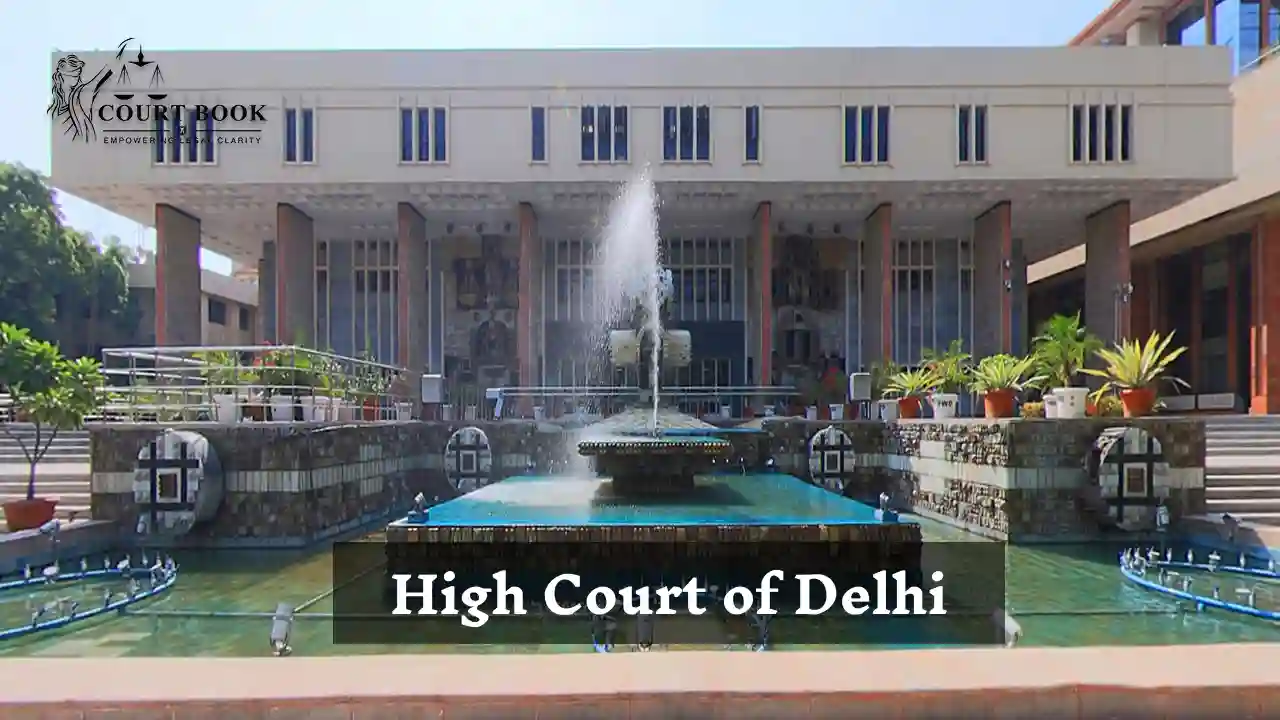
The Delhi High Court has delivered a detailed and sharply reasoned judgment on the rights of Civil Defence Volunteers, holding that authorities cannot hide behind “dismissal simpliciter” when the real reason carries a stigma. The ruling came in two connected writ petitions filed by volunteers who were removed from duty during the COVID-19 period without being told why.
The court also examined a deeper constitutional issue - whether Parliament can completely block access to courts in such cases.
Background of the Case
The petitions were filed by Deepak Kumar and Faruk Khan, both enrolled as Civil Defence Volunteers under the Civil Defence Act, 1968. They were engaged on call-out duty in Delhi and were removed from service in March and April 2020, at the height of the pandemic.
Read also:-Supreme Court Backs Merit in Court Jobs: Reserved Candidates Can't Be Shut Out of Open Category
The dismissals were issued under Section 6(2) of the Act, a provision that allows authorities to discharge a volunteer if their “continued presence is found undesirable,” without giving reasons. Appeals filed by the petitioners were also rejected, mostly on technical grounds like limitation, again without detailed reasoning.
Both petitioners argued that their removals were not simple administrative decisions but were linked to allegations - non-joining of COVID duty in one case and a police FIR involving an NGO in the other. They said this made the dismissals punitive, not innocent.
They also challenged Section 14(1) of the Act, which bars courts from entertaining challenges to orders passed under the law.
Read also:-Bombay High Court Rules CIDCO Agreement Was Only a License, Quashes ₹26 Lakh Stamp Duty Demand
Court’s Observations
The division bench of the Delhi High Court, led by Justice C. Hari Shankar and Justice Om Prakash Shukla, carefully examined whether the dismissals were truly “simpliciter.”
The court noted that although the orders did not mention reasons on their face, the surrounding circumstances told a different story.
“The court cannot be blind to what lies beneath the surface,” the bench observed, adding that when dismissal is rooted in alleged misconduct, it becomes stigmatic in substance.
In Deepak Kumar’s case, the government itself admitted during arguments that he was removed for not joining COVID duty. In Faruk Khan’s case, the appellate authority later relied on alleged involvement in illegal mask production - even though he was not named in the FIR.
The bench held that such dismissals attract Section 6(1) of the Act, which mandates an inquiry and a fair hearing.
On the constitutional challenge, the court took serious exception to Section 14(1), which attempts to completely bar judicial review.
“Judicial review is part of the basic structure of the Constitution,” the bench said, making it clear that Parliament cannot create an absolute wall against courts, especially when fundamental rights and fairness are at stake.
Read also:-Big Relief for Wife: Allahabad High Court Orders Maintenance From Application Date
Decision of the Court
The Delhi High Court ruled that:
• The dismissals of both petitioners were stigmatic in substance, even though described as dismissals simpliciter.
• Denial of a hearing violated principles of natural justice.
• Section 6(2) cannot be used to bypass inquiry when dismissal is based on allegations.
• Section 14(1) cannot oust the jurisdiction of constitutional courts in such matters.
Accordingly, the court set aside the impugned dismissal and appellate orders and allowed the writ petitions to this extent, reaffirming that even volunteer-based systems must operate within constitutional limits.
Case Title: Deepak Kumar v. Directorate of Civil Defence & Anr.; Faruk Khan v. Directorate of Civil Defence & Anr.
Case Numbers: W.P.(C) 4233/2022 and W.P.(C) 16081/2023
Case Type: Writ Petition (Constitutional Challenge)
Decision Date: 09 December 2025
Download Judgment

