

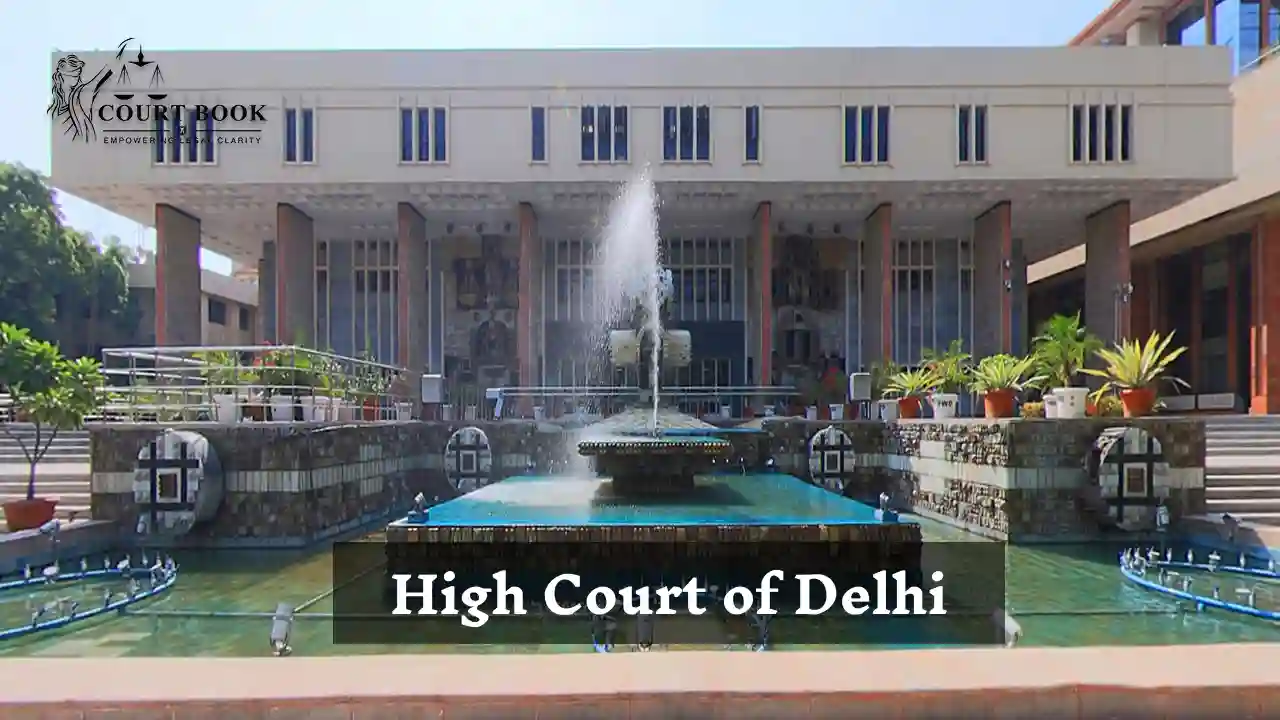
In a significant ruling on the functioning of statutory bodies and procedural fairness, the Delhi High Court has upheld the inclusion of the Mumbai Press Club as an eligible “association of persons” for the reconstitution of the 15th Press Council of India. The court dismissed the appeal filed by the Press Council of India (PCI), affirming that the rejection of the Press Club’s application was based on hyper-technical grounds and not on substantive legal deficiencies.
Background of the Case
The dispute arose during the process of constituting the 15th Press Council of India under the Press Council Act, 1978. As per the law, associations representing working journalists are required to submit claims for inclusion so their nominees can be considered for the Council.
In June 2024, the Press Council invited applications from eligible associations. The Mumbai Press Club submitted its claim under the category of “working journalists other than editors.” However, the Scrutiny Committee rejected its application, citing several procedural shortcomings-such as alleged defects in documentation, notarisation, and a discrepancy in the name of the association.
Following this, the Press Council excluded the Mumbai Press Club from the final list notified on October 28, 2024. Aggrieved by the decision, the Press Club approached the Delhi High Court, where a Single Judge ruled in its favour. The Press Council then challenged that decision before a Division Bench.
Key Issues Before the Court
The Division Bench examined whether:
• The Scrutiny Committee was justified in rejecting the Press Club’s application
• Minor documentary defects could override substantive compliance
• The Single Judge erred in applying the doctrine of substantial compliance
The Press Council argued that statutory rules must be strictly followed and that the Press Club failed to meet eligibility conditions. On the other hand, the Press Club maintained that it had met all essential legal requirements and that the objections raised were purely technical.
Court’s Observations
The Bench, led by Chief Justice Devendra Kumar Upadhyaya and Justice Tushar Rao Gedela, found no fault with the Single Judge’s reasoning.
On the issue of the registration certificate being “illegible,” the court noted that the Press Club had submitted a fresh certificate issued in July 2024, which clearly established its legal existence. The court observed:
“The insistence on the legibility of a decades-old document, despite a fresh certificate being on record, amounts to placing form over substance.”
Regarding the alleged discrepancy between “Press Club Bombay” and “Mumbai Press Club,” the court accepted the explanation that the name change merely reflected the renaming of the city from Bombay to Mumbai. The judges held that both names referred to the same legal entity and that this could not be a ground for rejection.
On the issue of notarisation, the court noted that Mumbai follows a standard practice where the notary stamp appears on the final page, and this method is widely accepted by courts. The Bench said rejecting documents on this basis was arbitrary.
The court also dismissed objections related to non-submission of meeting minutes and authorisation letters, noting that these were either not mandatory under the rules or were already adequately complied with.
Doctrine of Substantial Compliance Applied
A major part of the judgment relied on the doctrine of substantial compliance. The court reiterated that procedural rules are meant to facilitate justice, not defeat it.
Referring to Supreme Court precedents, the Bench observed:
“Where the essential requirements of the statute are fulfilled, minor procedural defects cannot be used to deny substantive rights.”
The court clarified that only violations affecting the core purpose of the law could justify rejection, which was not the case here.
Read also:-Rajasthan High Court Upholds Bank Officer's Dismissal, Says Courts Can't Reassess Disciplinary
Final Decision
Upholding the Single Judge’s ruling, the Delhi High Court dismissed the appeal filed by the Press Council of India. It confirmed that the Mumbai Press Club was wrongly excluded and directed that it be treated as a valid association for the purpose of constituting the 15th Press Council.
The court also noted that the Press Council had already issued a subsequent notification on December 2, 2024, including the Mumbai Press Club, in compliance with the earlier judgment.
No costs were imposed on either party.
Case Title: Press Council of India v. Press Club, Mumbai & Ors.
Case Number: LPA 1242/2024
Decision Date: January 16, 2026


