The Delhi High Court has upheld a trial court decree directing a man to pay nearly ₹9 lakh to his mother from a joint bank account left behind by his late grandfather, holding that the mother’s entitlement flowed directly from a probated Will and was not barred by limitation.
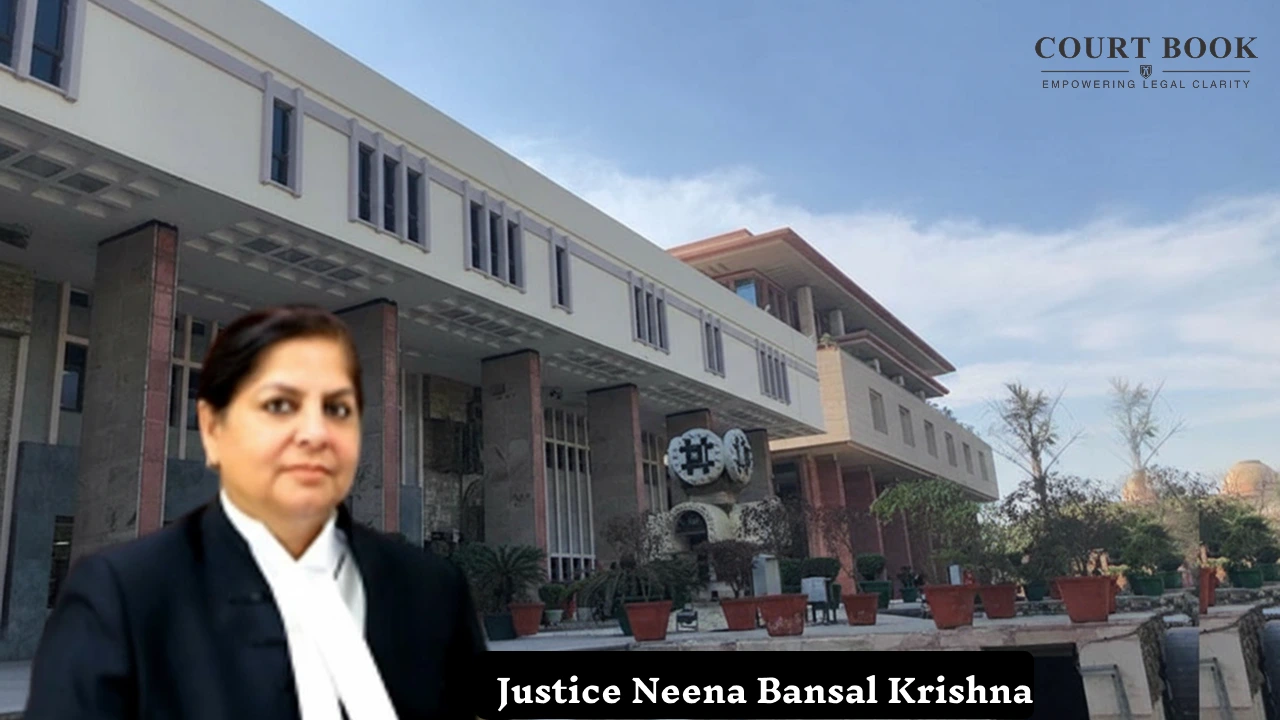
Justice Neena Bansal Krishna dismissed the appeal filed by Dileep Singh against the judgment passed in favour of his mother, Girija Devi, over money lying in a joint bank account maintained by late Prabhu Nath Singh.
Background Of The Case
According to the case record, Girija Devi filed a recovery suit seeking ₹8,99,015 along with interest, claiming she was entitled to 50% of the money lying in a joint savings account maintained by her late father-in-law, Prabhu Nath Singh.
She alleged that after the death of Prabhu Nath Singh in August 2009, her son Dileep Singh operated the account and withdrew the funds without informing her. The account, jointly held by the deceased, the mother and the son, allegedly contained about ₹17.98 lakh shortly before the death of the account holder.
The dispute later surfaced during probate proceedings relating to a Will dated June 26, 2007. The Will stated that money lying in joint bank and post office accounts would devolve upon the respective joint holders.
Dileep Singh opposed the suit, claiming the dispute had already been settled within the family in 2009 and argued that the claim was filed beyond the limitation period.
The High Court noted that the Will had already been probated and was never disputed by either side during the proceedings.
“The intention of the Testator is manifest from the plain language used therein,” the court observed while referring to the clause dealing with joint accounts.
Justice Krishna held that both the mother and son became entitled to equal shares in the bank balance after the death of Prabhu Nath Singh because both were surviving joint holders in the account.
The court also rejected the argument that the Will had not been proved properly under the Evidence Act.
“Once Probate is granted, the Probate Judgment operates in rem and the Will is not required to be proved afresh,” the bench said.
On the issue of limitation, the court held that mere knowledge of operation of the account in 2009 could not automatically amount to denial of the mother’s rights under the Will.
“The right to sue arises only when such entitlement is asserted and is denied or not honoured,” the court noted.
The High Court further observed that the mother asserted her claim only after obtaining a duplicate passbook in 2013 and later issuing a legal notice. Therefore, the suit filed in 2014 was within limitation.
Finding no illegality or perversity in the trial court judgment, the Delhi High Court dismissed the appeal and upheld the decree directing payment of ₹8,99,015 with interest in favour of Girija Devi.
Case Details:
Case Title: Mr. Dileep Singh vs. Smt. Girija Devi
Case Number: RFA 481/2026
Judge: Justice Neena Bansal Krishna
Decision Date: May 21, 2026
Download Judgment





 Act (UAPA)-300x169.webp)


 and Advocates-300x169.webp)


-300x169.webp)