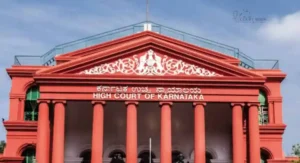
Sixteen years after a late-night street attack outside a Kannur theatre shocked the city, the Kerala High Court has cleared seven men who were serving life sentences for murder. The division bench said the prosecution failed to prove who actually committed the crime, calling the evidence “unsafe” for conviction. The ruling brings an abrupt end to a case that moved slowly through the courts for over a decade.
Background of the Case
The incident dates back to September 28, 2009. According to the prosecution, a quarrel at a street food stall between the deceased, Jyothish, and the first accused earlier that evening set off a chain of events.
Later that night, after a movie show near Savitha Talkies in Kannur, Jyothish and his friend Sarath were allegedly chased and attacked by a group armed with swords and iron rods. Jyothish died from his injuries soon after being rushed to hospital.
Police charged several men with rioting and murder under the Indian Penal Code. In 2018, a sessions court convicted seven of them and sentenced each to life imprisonment. The convicts then approached the High Court in appeal.
What the High Court Examined
The bench, led by Justice A.K. Jayasankaran Nambiar and Justice Jobin Sebastian, agreed with the trial court on one point - the death was clearly homicidal. Medical records and post-mortem reports left no doubt that Jyothish had been brutally assaulted.
Read also:-Second Marriage During Subsisting First One Void, Chhattisgarh HC Rules in Property Case
But the judges drew a sharp line between how the crime happened and who committed it. The real question, they said, was identity.
Court’s Observations
The prosecution’s case rested mainly on three witnesses who claimed to have seen the attack. The High Court found serious cracks in their testimony.
One of the key witnesses, who said he was with the deceased both during the earlier quarrel and at the time of the killing, had failed to name the main accused in his first statement to police.
Calling this a “fatal omission,” the bench noted that such silence was unnatural. “It is beyond the pale of ordinary human conduct,” the judges observed, to stay silent about a known attacker when reporting a friend’s murder.
Read also:- Woman Free to Choose Her Life: Orissa High Court’s Strong Stand Against Forced Marriage
Another witness, presented as an eyewitness, admitted he did not even go to the hospital to check on his injured friend and learnt of the death only the next day. The court said this behaviour did not fit that of a normal person who had just seen a violent killing.
The third witness could not identify any of the accused in court and only confirmed that a group attack had happened - not who carried it out.
Problems with Identification
A major concern for the bench was the long delay. The crime occurred in 2009, but witnesses identified the accused in court only in 2018 - almost nine years later.
No Test Identification Parade was ever conducted during the investigation. While such a parade is not legally mandatory, the court said it becomes crucial when witnesses had no prior acquaintance with the accused.
Without it, the judges felt, the dock identification in court was “not free from doubt.”
Forensic Gaps
The prosecution also relied on clothes allegedly recovered from the accused that bore bloodstains. But forensic tests came back inconclusive.
Worse, the results were never properly put to the accused during questioning, making them unusable as evidence. “There is no other material,” the bench noted, “to connect the named accused with the crime.”
Read also:- MP High Court Restores Teaching Jobs of Married Women Denied Reservation for Out-of-State Caste
The Decision
After re-examining the entire record, the High Court set aside the 2018 conviction.
“The conviction of the appellants,” the bench held, “rests solely on testimony that does not inspire confidence.”
Allowing the appeal, the court ordered that all seven men be released immediately, unless required in connection with any other case. With that, a long-running murder trial that once promised closure ended in acquittal - not because the crime did not happen, but because the law could not be sure who committed it.
Case Title: Manden Babinesh & Others vs State of Kerala
Case No.: Criminal Appeal No. 16 of 2019
Decision Date: December 16, 2025
Download Judgment