

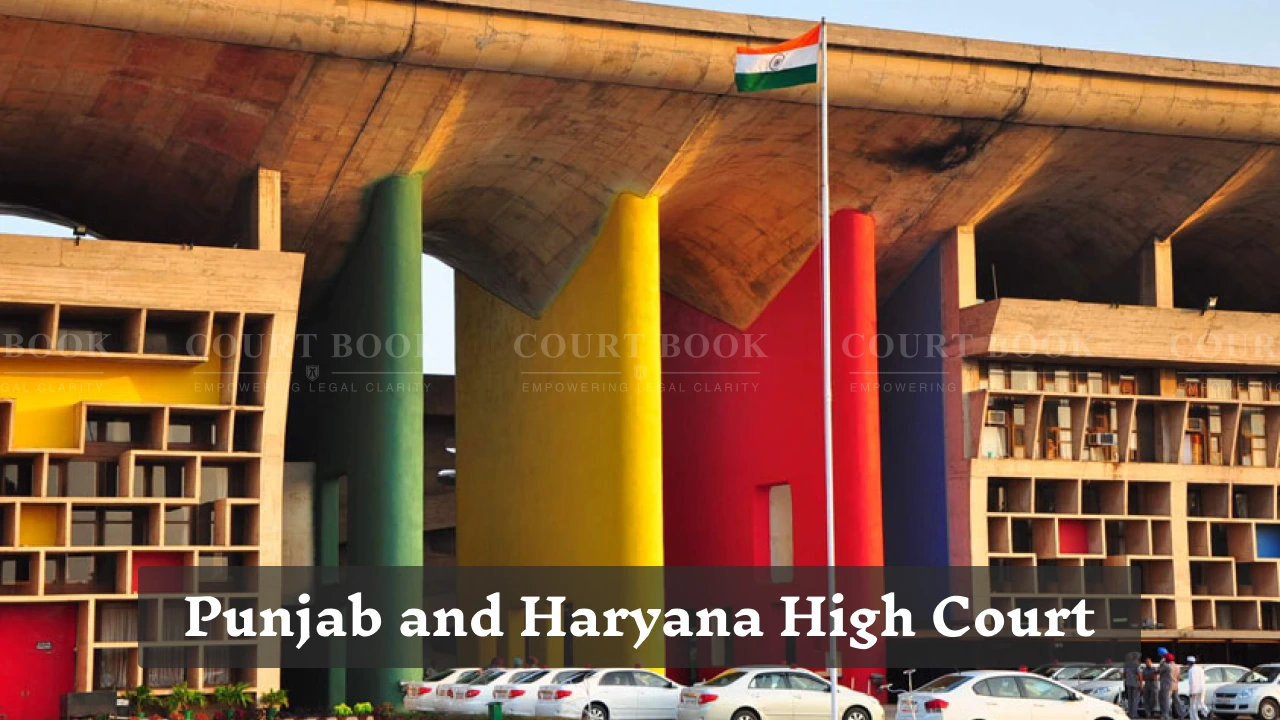
The courtroom was quiet when Justice Vinod S. Bhardwaj began dictating the order, but the message was clear. The Punjab and Haryana High Court on Monday brought relief to Roop Singh, quashing multiple criminal proceedings that had followed him for years after cheque-bounce disputes spiralled into “proclaimed person” cases. The relief, however, came with a condition - a monetary cost payable to charity.
हिंदी में पढ़ें
Background
The case had its roots in complaints filed under the cheque dishonour law, commonly known as Section 138 of the Negotiable Instruments Act. In simple terms, Roop Singh had issued cheques to business entities in Sirsa which bounced due to insufficient funds. Criminal complaints were filed, summons issued, and initially, he appeared before the trial court.
Read also:-J&K High Court Declines Pension Relief to Sainik School Mansbal Staff, Says No Legal Right Without
Things went wrong when Singh missed a court date in September 2021. His bail was cancelled, and later, the trial court declared him a proclaimed person - meaning the court formally recorded that he was evading proceedings. Once that happened, separate FIRs were registered under Section 174-A of the IPC, a provision that punishes failure to appear in court after a proclamation.
Over time, the financial disputes were settled. Singh paid back the cheque amounts along with compensation. The complainants made statements before the trial court, confirming full satisfaction and withdrawing their cases. Yet, the FIRs under Section 174-A continued to hang over him, prompting the petitions before the High Court.
Read also:-Delhi High Court Refuses to Revive Criminal Case by Company Director, Upholds Discharge of Ex
Court’s Observations
Justice Bhardwaj noted that the main disputes were purely financial and had been amicably resolved. “Undisputedly, the dispute between the private parties concerning the cheque amount has already been resolved,” the bench observed.
The State argued that Section 174-A creates an independent offence. In other words, once someone fails to appear after being proclaimed, the offence is complete, regardless of later compromise. The court acknowledged this legal position and even referred to a recent Supreme Court ruling explaining the distinction.
Still, the High Court leaned on its own past decisions. Citing earlier judgments, the bench said that when the original cheque-bounce case itself is withdrawn after settlement, continuing criminal proceedings for non-appearance would serve no real purpose. The judge remarked that such continuation would amount to “an abuse of the process of law”.
Read also:-Allahabad High Court Refuses Maintenance to Woman After Decade-Long Live-In, Says Marriage
The court also took note of the peculiar facts - the absence was not deliberate flight from justice, and the default had effectively been regularised once the dispute ended.
Decision
Allowing all three petitions, the High Court quashed the proclamation orders and the FIRs registered under Section 174-A IPC against Roop Singh, along with all related proceedings. However, the relief was made conditional. The petitioner must deposit ₹15,000 in each case with the Red Cross Old Age Home, Panchkula, within two months of receiving the certified copy of the order.
With that direction, the court closed the matter, drawing a line under litigation that began with bounced cheques and ended, finally, with settlement and closure.
Case Title: Roop Singh v. State of Haryana
Case Type: Criminal Miscellaneous Petition (Quashing of FIR / Proclamation Proceedings)
Case No.: CRM-M-10310-2024
(Along with CRM-M-10136-2024 and CRM-M-10138-2024)Date of Judgment / Order: 16 December 2025


