

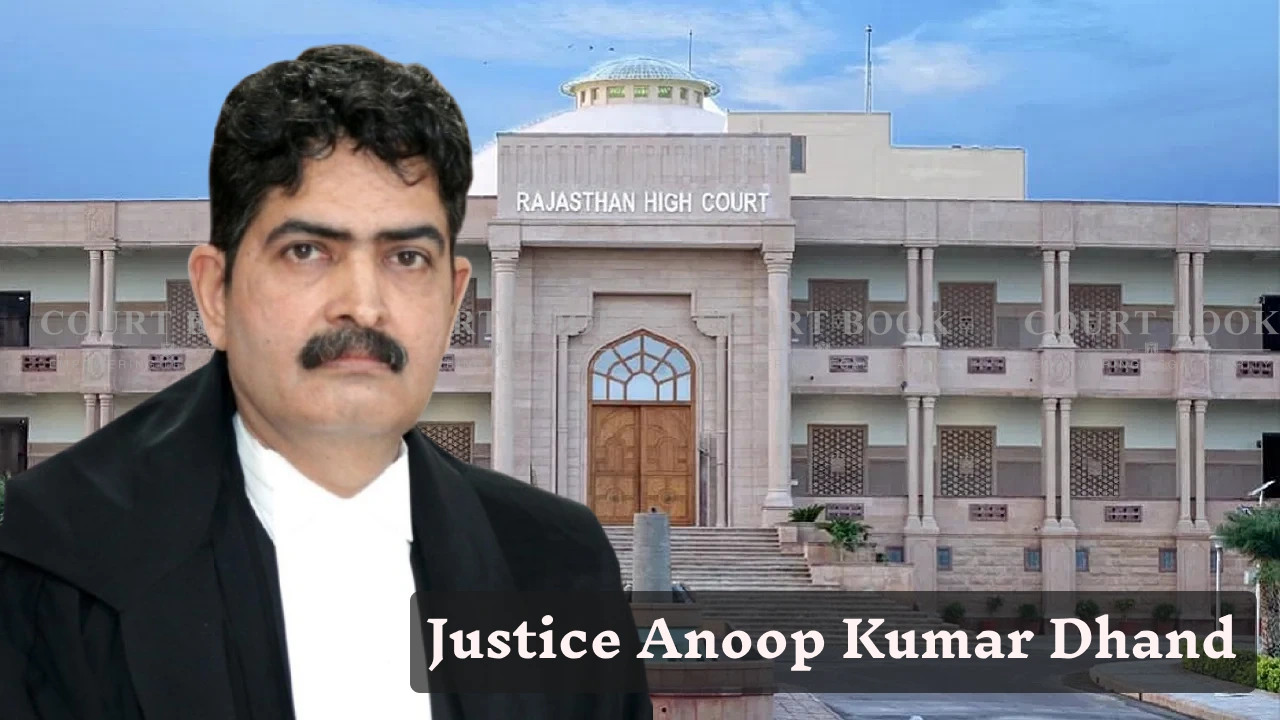
The Rajasthan High Court has refused to interfere with a trial court’s decision to summon the parents-in-law of a deceased woman in a dowry death case. The Court held that there was sufficient material on record to proceed against them under serious charges, including cruelty and dowry death.
Background of the Case
The case arose from the death of a woman, Monika, who died by suicide within just one and a half months of her marriage in February 2015. According to court records, the incident occurred on March 24, 2015, at her parental home.
Initially, the police filed a chargesheet only against the husband, leaving out the parents-in-law. However, during trial proceedings, an application under Section 319 of the Criminal Procedure Code (CrPC) was moved to summon additional accused based on emerging evidence. The trial court partly allowed this plea and summoned the in-laws under Sections 498A (cruelty) and 304B (dowry death) of the Indian Penal Code.
Read also:- Under S.125 CrPC No Right to Maintenance for Adult Son for Studies: Gauhati High Court
Challenging this order, the petitioners approached the High Court.
Counsel for the petitioners argued that the deceased was suffering from Bipolar Disorder and had been under medical treatment, including care at a mental hospital. It was claimed that her mental health condition, not any alleged harassment, led to her suicide.
They also pointed out that the police had initially found no evidence against them and had not included them in the chargesheet. The counsel emphasized that mere statements by family members should not be enough to summon them, especially when chances of conviction appeared weak.
Opposing the plea, the prosecution argued that the death occurred within a very short time after marriage, raising serious suspicion. It relied on statements of the deceased’s parents and brother, who alleged that she was harassed for dowry soon after the wedding.
Read also:- Supreme Court Revives ₹50 Crore Cheque Bounce Case, Says Trial Cannot Be Skipped
The prosecution also highlighted the existence of a suicide note in which the deceased reportedly blamed her in-laws, stating:
“Mummy, sasural walon ne meri zindagi barbaad kardi, unhe chhodna mat.”
Justice Anoop Kumar Dhand noted that at the stage of Section 319 CrPC, the court is not required to determine guilt but only to assess whether there is sufficient evidence to proceed.
“The Court observed that at this stage, more than a prima facie case is required, but not a conclusive finding on conviction,” the order stated.
The Court emphasized that statements of key witnesses clearly indicated allegations of dowry harassment soon after marriage. It further noted that whether the mental health condition of the deceased led to suicide is a matter for trial, not for determination at this stage.
Read also:- Wife’s False Complaints Amount to Mental Cruelty, Divorce Stands: Calcutta High Court
Importantly, the Court also relied on settled law that even persons not chargesheeted can be summoned if evidence during trial suggests their involvement.
The High Court found no error in the trial court’s order and dismissed the petition. It held that there was “more than a prima facie case” to proceed against the petitioners under Sections 498A and 304B IPC.
However, considering that the petitioners were elderly parents-in-law and their custodial interrogation was not necessary, the Court granted relief by converting non-bailable warrants into bailable warrants. It directed that they be released on bail upon appearance before the trial court.
The Court clarified that all observations were limited to the present proceedings and would not affect the final outcome of the trial.
Case Details
Case Title: Mangtu Ram & Anr. vs State of Rajasthan & Anr.
Case Number: S.B. Criminal Misc. Petition No. 1605/2021
Judge: Justice Anoop Kumar Dhand
Decision Date: 27 March 2026
Counsels:
• For Petitioners: Mr. A.K. Gupta (Sr. Adv.) & team
• For Respondents: Mr. Jitendra Singh Rathore (PP) & Dr. Shivendra Singh Rathore
Download Order

