

The Supreme Court has granted the benefit of probation to a Bengaluru Metropolitan Transport Corporation (BMTC) driver convicted for causing death by negligence in a 2011 road accident case.
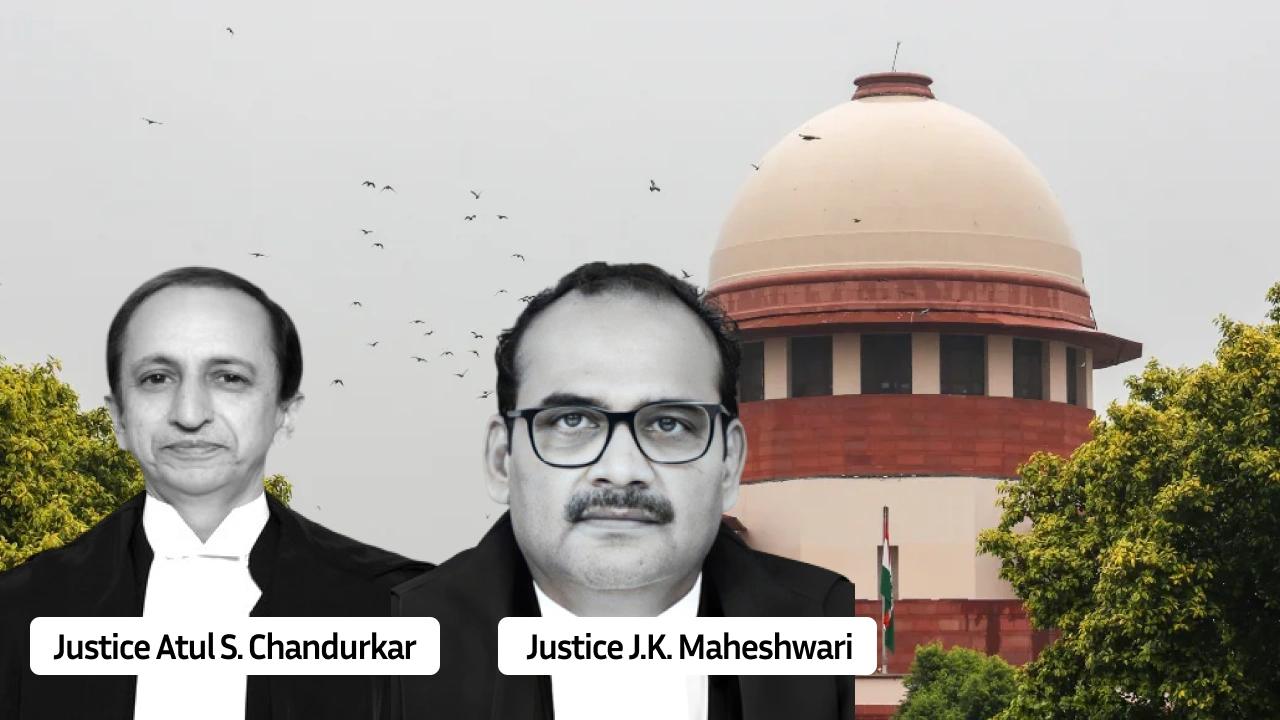
A Bench of Justice J.K. Maheshwari and Justice Atul S. Chandurkar modified the sentence imposed on the driver while maintaining his conviction under Section 304-A of the Indian Penal Code.
The Court directed that the ₹5 lakh amount already deposited by the appellant be released to the deceased woman’s family as compensation.
Background of the Case
The case arose from a road accident that occurred on December 27, 2011, in Bengaluru. The appellant, Mahadevanna D.M., was driving a BMTC bus when it hit a pedestrian, Rangamma, who was crossing the road. She later died from the injuries sustained in the accident.
Read Also:- Supreme Court Says No Vested Right To Promotion Under Old Rules After Cadre Restructuring
Following the incident, an FIR was registered and the driver was prosecuted for offences under Sections 279 and 304-A of the IPC along with Sections 134(b) and 187 of the Motor Vehicles Act. The Trial Court convicted him, and the conviction was later affirmed by the First Appellate Court.
The Karnataka High Court subsequently set aside the conviction under Section 279 IPC but upheld the conviction for causing death by negligence under Section 304-A IPC.
What Happened During the Hearing
During the hearing before the Supreme Court, counsel for the appellant argued that the driver was entitled to relief under Section 3 of the Probation of Offenders Act, 1958, since the maximum punishment prescribed for the offence did not exceed two years.
The State did not oppose the request, provided the amount deposited by the appellant was released to the victim’s family as compensation.
Court’s Key Observation
The Supreme Court observed that Section 3 of the Probation of Offenders Act permits courts to release certain offenders after admonition where the punishment prescribed is not more than two years.
Read Also:- Supreme Court Quashes FIR Against Woman in Faridabad Land Dispute, Says Criminal Law Cannot Be Used in Civil Matters
The Bench held that the appellant fulfilled the statutory requirements for such relief because both offences for which he stood convicted carried punishment below the two-year threshold.
The Court also clarified that the benefit granted under Sections 3 and 12 of the Probation of Offenders Act would protect the appellant from employment-related disqualification arising from the conviction.
Court’s Decision
While affirming the conviction, the Supreme Court substituted the six-month jail term and fines imposed by the lower courts with a consolidated compensation amount of ₹5 lakh payable to the deceased’s family.
The Registry was directed to transfer the deposited amount, along with accrued interest, to the legal heirs of the deceased within four weeks after submission of bank details.
Case Title: Mahadevanna D.M. v. State of Karnataka & Anr.
Case Number: Criminal Appeal arising out of SLP (Criminal) No. 4563 of 2022
Court: Supreme Court of India
Judges: Justice J.K. Maheshwari and Justice Atul S. Chandurkar
Date: May 18, 2026
Download Judgment

