

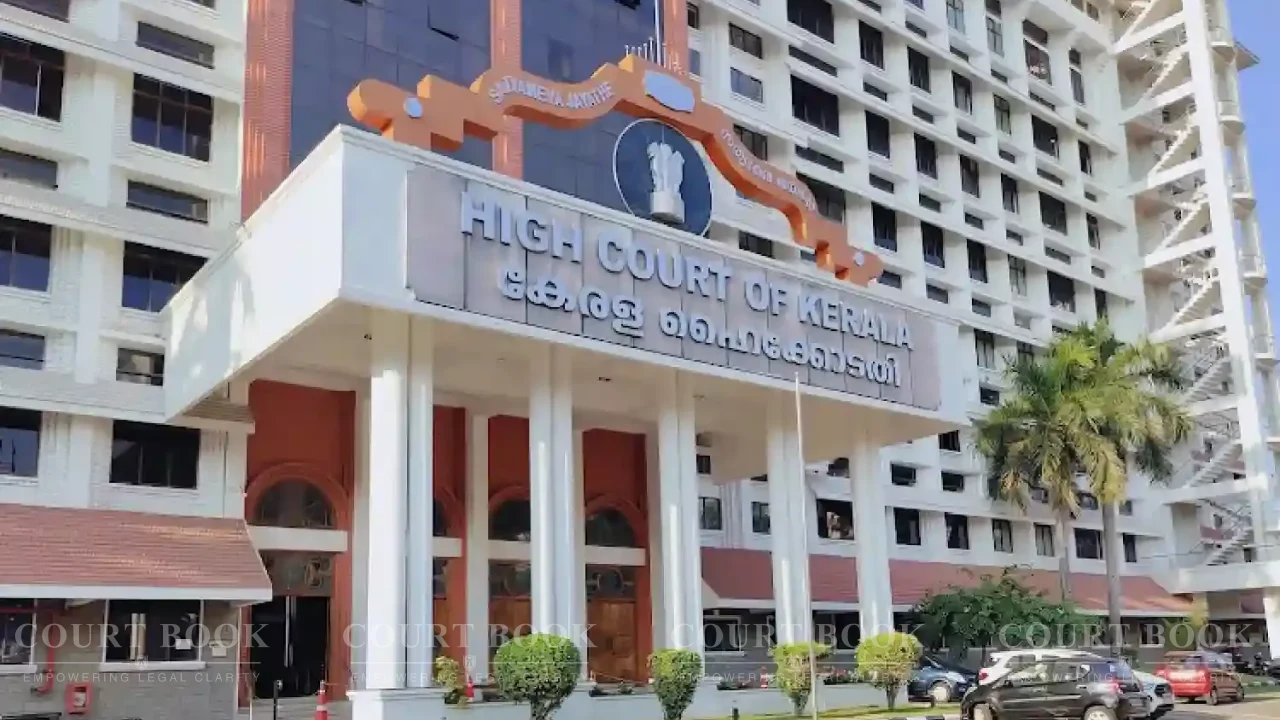
The Kerala High Court has ruled that the legitimate children born from a void marriage are entitled to share the retirement benefits and family pension of their deceased father, even though the woman claiming to be his second wife cannot receive those benefits as a widow. The Court also directed the Kerala State Road Transport Corporation (KSRTC) to consider the deceased employee's son's application for compassionate appointment under the dying-in-harness scheme.
Background of the Case
The petition was filed by Vasantha K and her son Divesh, the wife and son of late Velayudhan C., who worked as a Vehicle Supervisor with KSRTC. Velayudhan died while on duty on May 7, 2015. After his death, the petitioners sought release of his service and retirement benefits and requested compassionate appointment for the son under KSRTC's dying-in-harness scheme.
The dispute arose after Lakshmi, claiming to be Velayudhan's second wife, also sought the terminal benefits. She asserted that two children were born from her relationship with the deceased and claimed to be one of his legal heirs. Because of the competing claims, KSRTC withheld payment and asked for a succession certificate before releasing any benefits.
Court's Observation
Justice Shoba Annamma Eapen examined the legal heirship certificate placed before the Court and found that while Lakshmi herself was not shown as a legal heir, her two children were included as the deceased employee's legitimate children. The Court also noted that there was no dispute that Vasantha K. was the legally wedded wife of Velayudhan.
Referring to the Supreme Court's decision in Rameshwari Devi v. State of Bihar and Section 16 of the Hindu Marriage Act, the Court explained that although a second marriage contracted during the subsistence of the first marriage is void, children born from such a relationship are treated as legitimate and are entitled to inherit the property and service benefits of their parents.
The bench observed,
"The children of the deceased employee born out of the second wedlock would be entitled to share in the family pension and death-cum-retirement gratuity. However, the second wife will not be entitled to get the retirement benefits nor the family pension."
The Court further found that the delay in considering the compassionate appointment application was solely because of the dispute regarding the deceased employee's legal heirs.
Decision
Allowing the writ petition, the High Court directed KSRTC to distribute the death-cum-retirement gratuity, family pension and other retirement benefits among all the legal heirs named in the legal heirship certificate, in accordance with law. These include the legally wedded wife, the son from the first marriage, the deceased's mother, and the two legitimate children born from the second relationship.
The Court also directed KSRTC to consider Divesh's application for appointment under the dying-in-harness scheme within three months.
It clarified that if he chooses not to seek compassionate appointment, the children of Lakshmi would be free to apply for such appointment, subject to their eligibility under the applicable rules.
Case Details
Case Title: Vasantha K. & Anr. v. Kerala State Road Transport Corporation & Ors.
Case Number: WP(C) No. 32691 of 2018
Judge: Justice Shoba Annamma Eapen
Decision Date: 23 June 2026


