

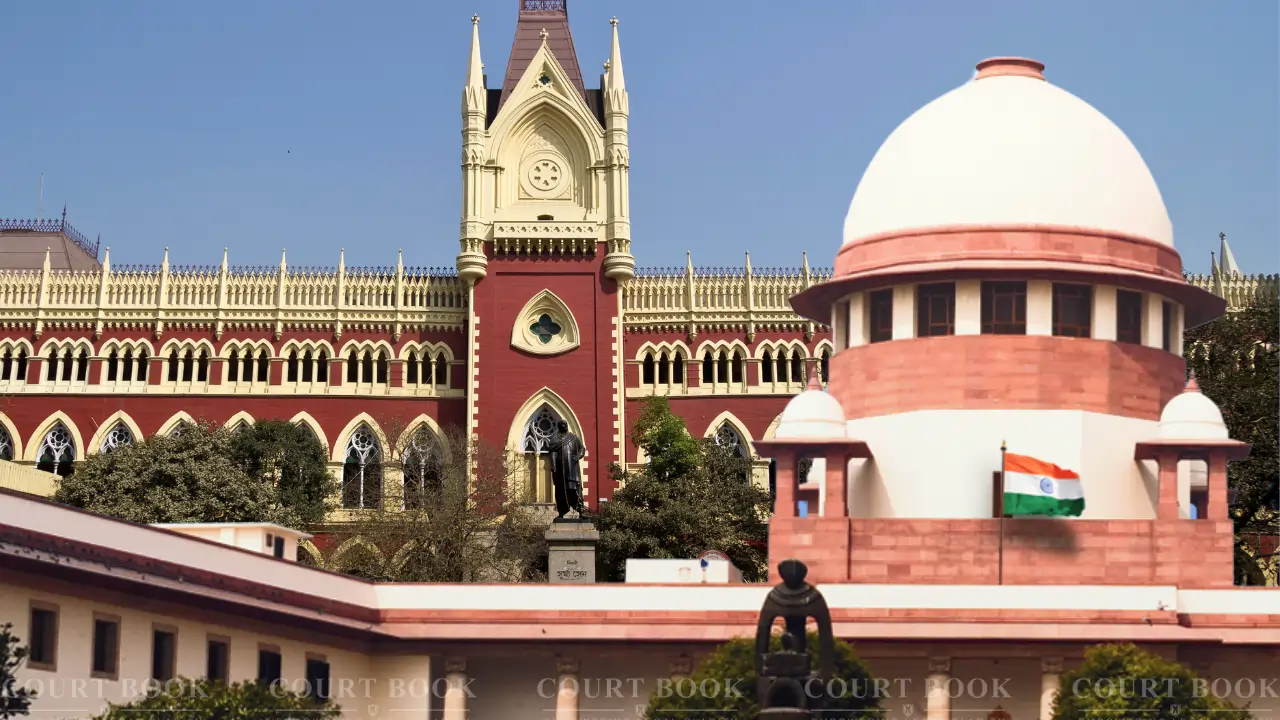
In a detailed ruling delivered this week, the Supreme Court of India settled a long-pending legal question on limitation under company law. The Court held that the Company Law Board (CLB), a quasi-judicial body, had no power to condone delay in appeals filed under Section 58(3) of the Companies Act, 2013, before the National Company Law Tribunal (NCLT) came into existence.
The verdict brings clarity to cases filed during the transition phase between the old Companies Act, 1956 and the new law of 2013.
Background of the Case
The dispute arose from a refusal by The Property Company (P) Ltd. to register the transmission of 20 equity shares claimed by Rohinten Daddy Mazda under a probated will of his late mother.
Mazda approached the CLB nearly two decades after the probate, seeking rectification of the company’s register. When the company refused, he filed an appeal under Section 58 of the Companies Act, 2013 - 249 days beyond the statutory time limit.
The CLB condoned the delay, citing equitable considerations and the fact that the petitioner resided abroad. This decision was upheld by the Calcutta High Court, prompting the company to move the Supreme Court.
The central question was narrow but significant:
Did the Company Law Board have the authority to condone delay in filing an appeal under Section 58(3) of the Companies Act, 2013, at a time when the Limitation Act had not been made applicable to it?
This issue mattered because Section 433 of the Companies Act, which applies the Limitation Act to company law tribunals, came into force only on 1 June 2016, after the CLB’s order.
Court’s Observations
Justice J.B. Pardiwala, speaking for the Bench, traced decades of precedent on limitation law. The Court underlined a settled principle: the Limitation Act applies only to courts, not to tribunals or quasi-judicial bodies, unless the statute expressly says so.
“The CLB was never vested with the power to apply the Limitation Act,” the Bench observed, adding that such authority was consciously conferred only on the NCLT and NCLAT through Section 433.
Read also:- Bribe Case Revived: Supreme Court Clears Way for Trial Despite Engineer’s Departmental Exoneration
The Court rejected the argument that “principles” of limitation could be borrowed indirectly. “Power to condone delay is not a matter of discretion or equity. It must flow from statute,” the judgment noted.
The Supreme Court found fault with the Calcutta High Court’s approach, which relied on later legislative changes to justify the CLB’s earlier action.
“Section 433 cannot be applied retrospectively to validate an order passed by a body that lacked jurisdiction on the date of decision,” the Bench held.
It also clarified that an appeal under Section 58(3), though labelled an “appeal”, is original in nature, and therefore not open to delay condonation unless the law expressly permits it.
Read also:- Supreme Court Restores Hotel Injunction, Clarifies Arbitration Starts with Notice-Not Court Filing
Final Decision
Allowing the company’s appeal, the Supreme Court set aside both the High Court judgment and the CLB’s order condoning the 249-day delay.
The Court conclusively ruled that the CLB had no legal authority to extend limitation under Section 58(3) of the Companies Act, 2013, and that such power came into existence only with the establishment of the NCLT in 2016.
The matter ended with the appeal being allowed, without any order as to costs.
Case Title: The Property Company (P) Ltd. v. Rohinten Daddy Mazda
Case No.: Civil Appeal No. 92 of 2026
Decision Date: 07/01/2026
Download Judgment

