

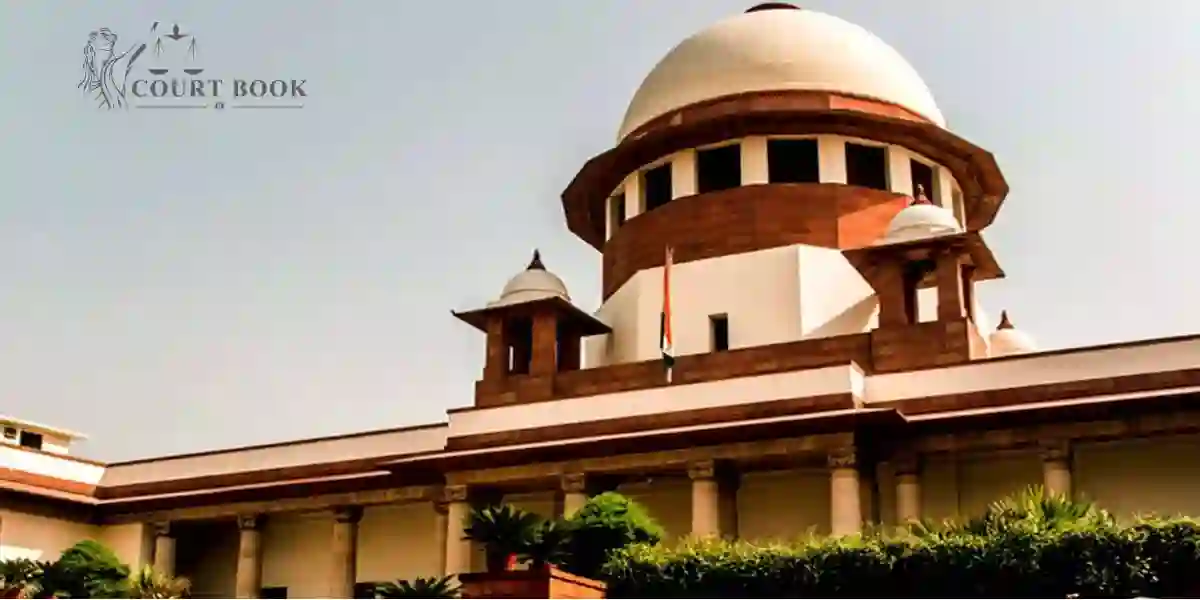
The Supreme Court on Monday brought a long-running property dispute from north Karnataka to a close, ruling that sub-lessees cannot reopen eviction proceedings once the main tenancy itself has already been conclusively decided. Sitting in Court No. 12, the bench made it clear that execution courts are not meant to become a second trial stage, especially after years of litigation have already passed.
हिंदी में पढ़ें
Background
The case traces its roots back to a partition suit filed as far back as 2009 by Jakkavva and Savakka, seeking division and possession of family properties in Dharwad district. Part of the land was under a lease that had originally been granted to Indian Cotton Company Limited and later transferred to Siddalingappa Bulla in 1964.
Siddalingappa Bulla, in turn, inducted sub-lessees into the property. After his death in 1999, disputes cropped up over whether the tenancy continued. Trial courts and the Karnataka High Court repeatedly held that the lease was not permanent and that tenancy rights ended with Siddalingappa Bulla’s death. Even the Supreme Court had earlier confirmed this position in connected proceedings.
Despite this, when the decree holders moved for execution, the sub-lessees stepped in, filing objections under Order XXI Rule 97 of the Code of Civil Procedure - a provision meant for third parties claiming independent rights.
Court’s Observations
The Supreme Court was not impressed. The bench observed that the respondents were “not claiming any independent right” and that their possession flowed entirely from Siddalingappa Bulla, whose tenancy had already come to an end.
Referring to settled law, the judges recalled an old Supreme Court ruling to underline the point. “The law does not require that the sub-lessee need be made a party,” the bench noted, adding that eviction decrees against the main tenant bind sub-lessees as well. This may appear harsh, the court said, but it is a risk a sub-lessee knowingly takes.
Allowing such objections at the execution stage, the bench felt, would amount to reopening the entire case through the back door. “They could not seek to be placed on a higher footing than their lessor,” the court remarked, pointing out that Siddalingappa Bulla’s legal heirs had already exhausted all remedies up to the Supreme Court.
Read also:-Supreme Court Reserves Verdict on Karnataka Land Acquisition Dispute Involving S.V. Global Mill
Decision
Setting aside the Karnataka High Court’s order dated December 18, 2024, the Supreme Court allowed the appeals and quashed the execution court’s decision to entertain the objections under Order XXI Rule 97. However, the bench left a small window open, clarifying that the sub-lessees could intervene in execution proceedings only to raise limited claims, such as reimbursement for constructions made on the land.
Importantly, the court directed the executing court to finish the eviction process expeditiously, preferably within six months, noting the “length of time that has lapsed” in this litigation. Pending applications, if any, were disposed of accordingly.
Case Title: Jakkavva & Anr. vs. Prahlad Gowda & Ors.
Case No.: Civil Appeal arising out of SLP (C) No. 1183 of 2025 with SLP (C) No. 4761 of 2025
Case Type: Civil Appeal (Property / Execution Proceedings)
Decision Date: 09 December 2025
Download order

