The Supreme Court on Thursday gave the green light for insolvency proceedings against Takshashila Heights India Pvt. Ltd., the developer of the Ahmedabad-based “Takshashila Elegna” project. In the same breath, the court declined to entertain an intervention plea by a cooperative housing society that represents a section of homebuyers, holding it had no legal standing at this stage of the case.
The ruling settles a high-stakes dispute involving Edelweiss Asset Reconstruction Company Ltd. (EARCL), the project’s lender, and brings clarity on when courts must admit insolvency petitions under the Insolvency and Bankruptcy Code (IBC).
Read also:-Supreme Court Cracks Down on Campus Deaths, Makes FIR Mandatory in Student Suicide Cases
Background of the case
Takshashila Heights had taken loans worth ₹70 crore in 2018 to develop the residential-cum-commercial project. Repayments slowed during the pandemic, and the account slipped into default. The debt was later assigned to EARCL, which initiated recovery steps and eventually moved the National Company Law Tribunal (NCLT) under Section 7 of the IBC to trigger insolvency.
In November 2024, the NCLT refused to admit the plea, noting the project was largely complete and warning that insolvency could harm homebuyers. EARCL appealed, and in July 2025 the National Company Law Appellate Tribunal (NCLAT) overturned the order, directing that the corporate insolvency resolution process (CIRP) be initiated.
Two appeals followed before the Supreme Court-one by the developer challenging the insolvency admission, and another by Elegna Co-operative Housing and Commercial Society Ltd., seeking to intervene as a representative of homebuyers.
Court observations
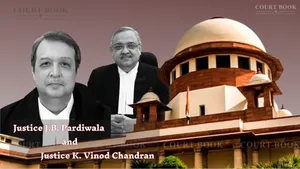
A bench led by Justice R. Mahadevan drew a clear line on the scope of courts at the admission stage of insolvency. The judges stressed that once a financial debt and default are shown, the law leaves little room for discretion.
“The moment default is established, admission of the insolvency petition must follow,” the bench observed, adding that business viability or the stage of project completion cannot override the statutory mandate.
On the developer’s argument that EARCL was using insolvency as a recovery tool, the court was blunt. It said the IBC does not bar a lender from invoking insolvency merely because other recovery proceedings are pending. Any allegation of misuse, the court said, must meet the strict test of bad faith under the Code.
Turning to the housing society’s plea, the bench held that while individual homebuyers are recognised as financial creditors, a society that is not a party to the loan transaction cannot claim an automatic right to intervene in a Section 7 proceeding. “At the pre-admission stage, the process remains between the creditor and the debtor,” the court noted, rejecting the society’s claim of locus standi.
Why homebuyers’ concerns were discussed
The judges acknowledged the anxiety insolvency often causes among flat buyers. They referred to past rulings that seek to protect homebuyers when real estate projects enter CIRP. Yet, the court made it clear that such protection must work within the legal framework of the IBC.
“The Code is meant for resolution and revival, not mere recovery,” the bench said, but added that this objective cannot dilute the basic trigger of insolvency-default. According to the court, safeguards for buyers now exist within the process itself, including representation in the committee of creditors through authorised representatives.
The decision
Upholding the NCLAT’s order, the Supreme Court ruled that:
• The insolvency application filed by EARCL against Takshashila Heights India Pvt. Ltd. stands admitted, and the CIRP will proceed.
• The intervention application of Elegna Co-operative Housing and Commercial Society Ltd. was rightly rejected for want of legal standing at this stage.
With this, the court closed the chapter on the preliminary battle, clearing the way for the formal insolvency process to move ahead.
Case Title: Elegna Co-op Housing Society Ltd. vs Edelweiss ARC Ltd. & Anr.
Case No.: Civil Appeal Nos. 10261 & 10012 of 2025
Decision Date: 15 January 2026
Download Judgment



-300x169.webp)
-300x169.webp)