

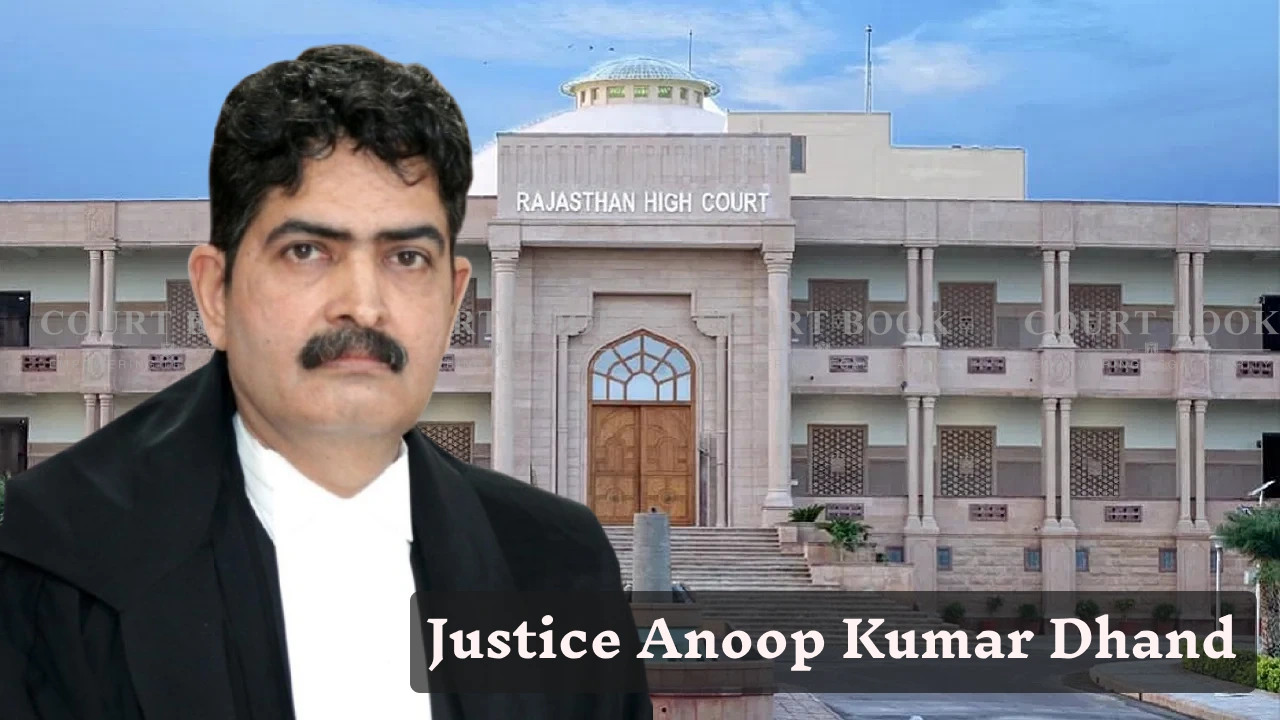
The Rajasthan High Court has held that when there is a genuine dispute regarding the age of a prosecutrix in a POCSO case, the trial court should not reject an application seeking crucial evidence merely on technical grounds. Justice Anoop Kumar Dhand observed that the court's duty is to uncover the truth and ensure a fair decision.
Allowing a criminal miscellaneous petition, the High Court set aside an order of the Special POCSO Court at Sawai Madhopur, which had refused to summon the prosecutrix's Class-I school records and the school's Principal.
Background of the Case
The petitioner, Chetan Mali, is facing trial for offences under the IPC, the Scheduled Castes and Scheduled Tribes (Prevention of Atrocities) Act, and the Protection of Children from Sexual Offences (POCSO) Act.
During the trial, the prosecution relied on the prosecutrix's Class-IV school admission record, which mentioned her date of birth as 10 February 2001. However, the defence pointed out that her Secondary School Certificate recorded her date of birth as 10 February 2000. The petitioner further claimed that her Class-I school records showed an even earlier date of birth-5 July 1999.
To verify the discrepancy, the petitioner sought summoning of the Principal of Upper Primary Aadarsh Vidhya Mandir, Chhan, along with the Class-I admission records. The trial court rejected the request, noting that the application had been filed at the stage of final arguments and lacked supporting affidavits.
Court's Observations
Justice Anoop Kumar Dhand found that the dispute regarding the prosecutrix's age could have a significant bearing on the trial. Referring to Section 94 of the Juvenile Justice (Care and Protection of Children) Act, 2015, the Court noted that where doubt exists regarding age, school records and matriculation certificates are relevant documents for determining the correct date of birth.
The Court also relied on the Supreme Court's decision in Natasha Singh v. Central Bureau of Investigation (State), which recognises the broad powers of courts under Section 311 of the Code of Criminal Procedure to summon material witnesses or documents whenever their evidence is necessary for a just decision.
Rejecting a technical approach, the bench observed:
“The purpose of Section 311 Cr.P.C. is not to favour or disfavour the prosecution or the accused, but naturally elicit and unfold the truth in order to exercise just decision in a case.”
The Court further observed:
“In the considered opinion of this Court, the instant case pertains to the alleged offence committed with a minor, so in order to bring the correct facts with regard to the actual date of birth of the prosecutrix, it is essential to summon prosecutrix's school record from Upper Primary Aadarsh Vidhya Mandir, Chhan pertaining to her admission in Class-I.”
Decision
The High Court allowed the criminal miscellaneous petition and quashed the Special POCSO Court's order dated 29 July 2024. It directed the trial court to summon the Principal of Upper Primary Aadarsh Vidhya Mandir, Chhan, along with the prosecutrix's Class-I admission records.
The Court also instructed the trial court to record the witness's evidence expeditiously and avoid unnecessary adjournments so that the trial may conclude at the earliest.
Case Details
Case Title: Chetan Mali v. State of Rajasthan & Another
Case Number: S.B. Criminal Miscellaneous (Petition) No. 5961/2024
Judge: Justice Anoop Kumar Dhand
Decision Date: 20 May 2026


