

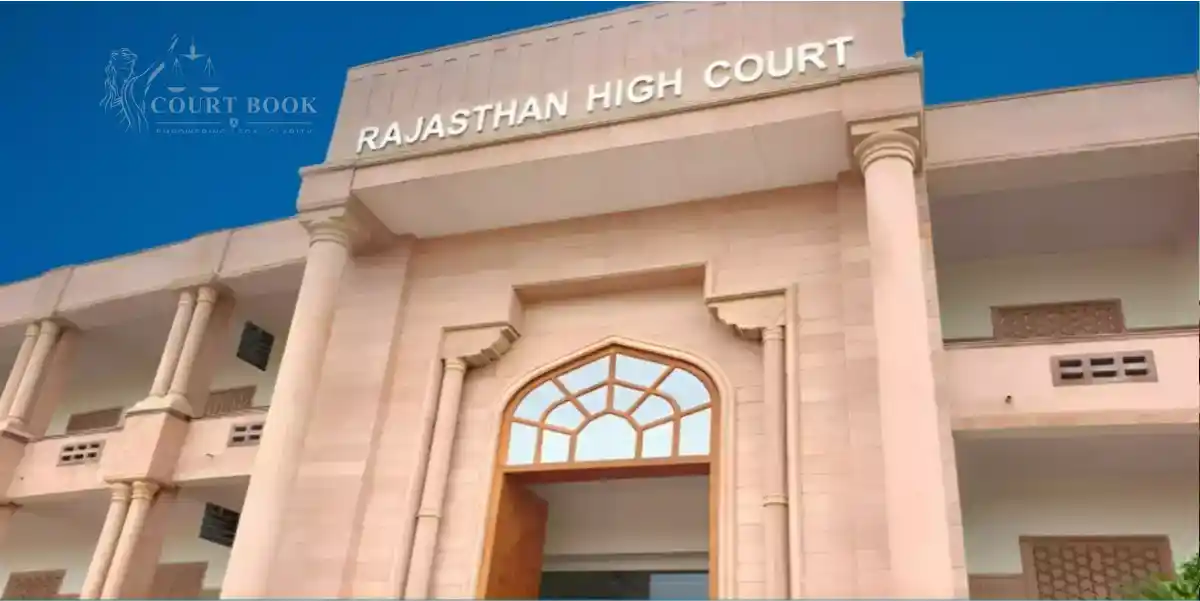
The Rajasthan High Court recently made it clear that an unregistered partition deed can be brought on record in a civil case for collateral purposes, provided the stamp duty and penalty are paid and the document's relevancy is proved.
This judgment was delivered by the bench of Justice Dr. Nupur Bhati, who set aside an order passed by the Trial Court that had earlier rejected such a document on the basis of non-registration.
“An unregistered document can be relied upon for collateral purpose, such as proving the severance of title or nature of possession, but not for dividing joint property by metes and bounds.”— Supreme Court in Sita Ram Bharma v. Ramavtar Bharma, cited by Rajasthan High Court
Background of the Case
A suit for permanent injunction was filed against the petitioner, in which the petitioner submitted a written statement seeking rejection of the suit.
While the case was pending, the petitioner filed an application under Order VIII Rule 1A(3) read with Section 151 of the Civil Procedure Code (CPC). The aim was to bring certain documents on record, including a partition deed.
The Trial Court partly accepted the application but rejected the request to admit the partition deed. The court cited that since the document was unregistered, it could not be considered part of the record.
This decision led the petitioner to file a civil writ petition before the Rajasthan High Court, claiming that the Trial Court had failed to properly consider the law under Order VIII of CPC.
The petitioner contended that:
• The Trial Court ignored the scope of Order VIII CPC, which allows unregistered documents to be admitted at least for collateral purposes.
• Even if such a document is inadmissible for proving the main purpose, it can still serve secondary or collateral uses in court.
Justice Dr. Nupur Bhati reviewed the petition, the impugned order, and the relevant legal precedents. The court heavily relied on the Supreme Court’s ruling in Sita Ram Bharma v. Ramavtar Bharma, where the top court allowed unregistered documents for collateral use.
The High Court clarified that:
• Unregistered deeds can be used to establish aspects like severance of joint ownership, possession, and shareholding nature, but not for actual division of property.
• The partition deed can be admitted, provided the required stamp duty and penalty are paid.
• The relevancy of the document must also be established by the party seeking to submit it.
“The document may be unregistered and inadmissible for certain purposes, but that does not prevent the court from considering it for proving related, collateral matters, once the stamp duty and penalty are duly paid.”— Rajasthan High Court
The High Court ruled in favor of the petitioner. It:
• Set aside the Trial Court’s order, which had earlier refused to admit the partition deed.
• Allowed the partition deed to be brought on record, subject to payment of stamp duty and penalty, and proof of its relevancy by the petitioner.
Title: Mohammad Salim & Ors. v Abdul Kayyum & Ors.
Counsel for Petitioner(s): Mr. Mansoor Ali Siddiqui
Counsel for Respondent(s): Mr. Avin Chhangani with Ms. Prenal Lodha
Download Order

