

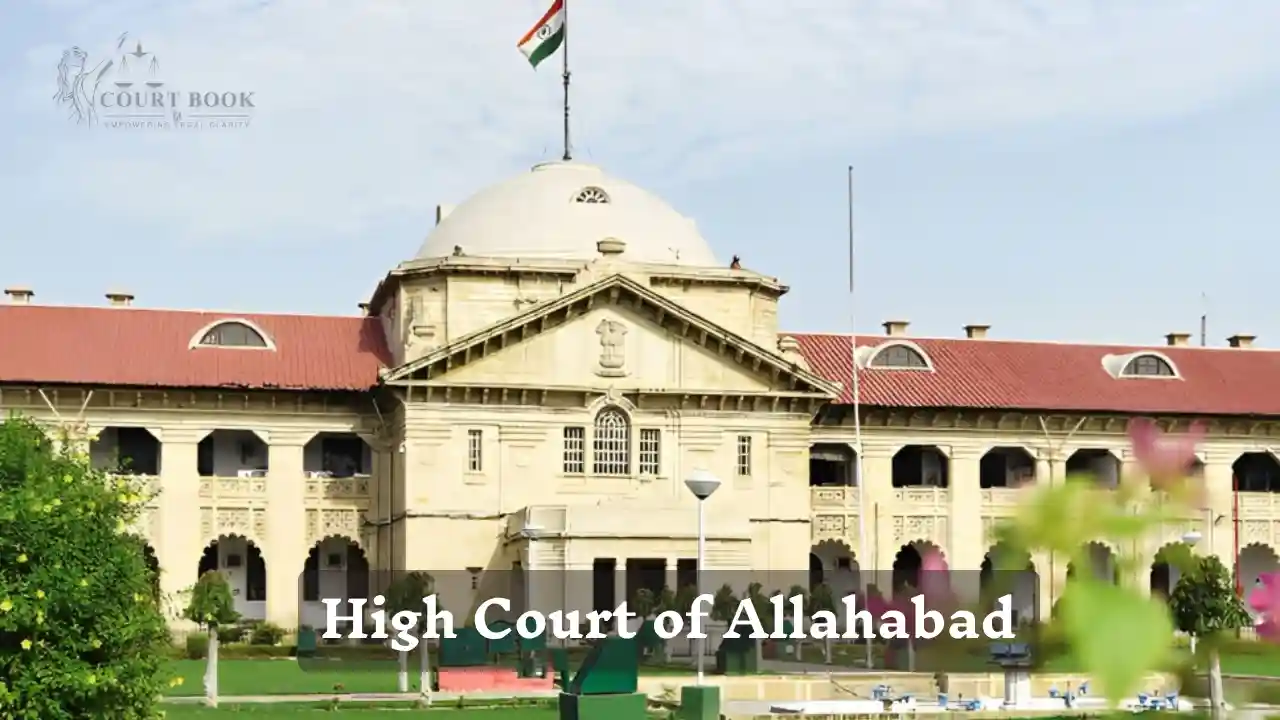
The Allahabad High Court has stepped in to address a recurring grievance quietly troubling litigants and lawyers alike - the improper handling of caveats at the Uttar Pradesh Board of Revenue. The issue came up during a writ petition filed by Tribhawan Goyal, where interim orders were passed by the Board despite an existing caveat, triggering questions of procedural fairness.
हिंदी में पढ़ें
While the court refrained from ruling on the merits of the interim stay itself, it chose to deal squarely with the broader administrative problem that surfaced during the hearing.
Read also:-Supreme Court Backs Merit in Court Jobs: Reserved Candidates Can't Be Shut Out of Open Category
Background of the Case
The petition arose from an interim stay and injunction granted by the Board of Revenue, Prayagraj, on March 25, 2025, in a land-related revision from Mathura district. Tribhawan Goyal, the petitioner before the High Court, argued that the stay was granted without serving notice to him, even though a caveat had already been filed on his behalf.
A caveat, in simple terms, is a formal request asking a court or tribunal not to pass any order without hearing the person who filed it. The grievance was that this safeguard had failed in practice.
The revision before the Board had been filed by Ashok Kumar. When the High Court took up the matter earlier, it noted allegations of widespread mismanagement of caveats - not only at Prayagraj but also at the Board’s Lucknow office and its circuit benches at Agra and Meerut.
Read also:-Bombay High Court Rules CIDCO Agreement Was Only a License, Quashes ₹26 Lakh Stamp Duty Demand
Court’s Observations
During the hearing, the High Court summoned Ashok Kumar and the advocates who appeared for him before the Board of Revenue. An affidavit filed by one of the advocates shed light on how caveats are currently handled at the Board.
According to the affidavit, once a revision or appeal is filed, the registry merely marks the caveat on the file and forwards it internally. No formal intimation is sent to the lawyer filing the case. Often, the advocate learns about the caveat only when the matter is listed in court for the first time.
The Bench took note of this system and found it deeply flawed.
“The procedure for marking a caveat appears to be faulty and lacking in basic fairness,” the court observed.
The court pointed out that notices of caveat sent by registered post frequently return unserved. Yet, no follow-up mechanism exists to ensure that the caveator is actually informed before urgent interim orders are considered.
The High Court underlined that fairness demands more than a mechanical endorsement on the file. If a caveat exists, the party seeking interim relief must ensure that the caveator’s counsel is effectively informed before the matter is taken up.
The Bench suggested several practical measures:
• Mandatory sharing of email addresses and mobile numbers by lawyers filing caveats
• Use of email, WhatsApp, or similar modes for urgent communication
• Attaching proof of such communication before seeking interim orders
• Exploring video conferencing options when the caveator’s lawyer is from another city
“If urgent information is conveyed through electronic means, proof of such communication must form part of the court record,” the Bench noted.
Read also:-Big Relief for Wife: Allahabad High Court Orders Maintenance From Application Date
While stopping short of quashing the interim order at this stage, the High Court issued broad guidelines for reforming caveat management. It left it to the Chairman and Members of the Board of Revenue to work out detailed procedures, including amendments to existing rules if required.
The court made it clear that the goal is to ensure a minimum standard of procedural fairness without defeating genuine urgency in revenue matters.
Decision
The issue concerning caveat management was disposed of with directions to the Board of Revenue to take corrective steps. The writ petition itself was ordered to be placed afresh before the appropriate Bench as per roster.
The order has been directed to be formally communicated to the Chairman and Registrar of the Board of Revenue, as well as the Revenue Secretary of Uttar Pradesh.
Case Title: Tribhawan Goyal vs State of Uttar Pradesh & Others
Case No.: Writ – B No. 1332 of 2025
Case Type: Writ Petition
Decision Date: 06 October 2025
Download Judgment

