

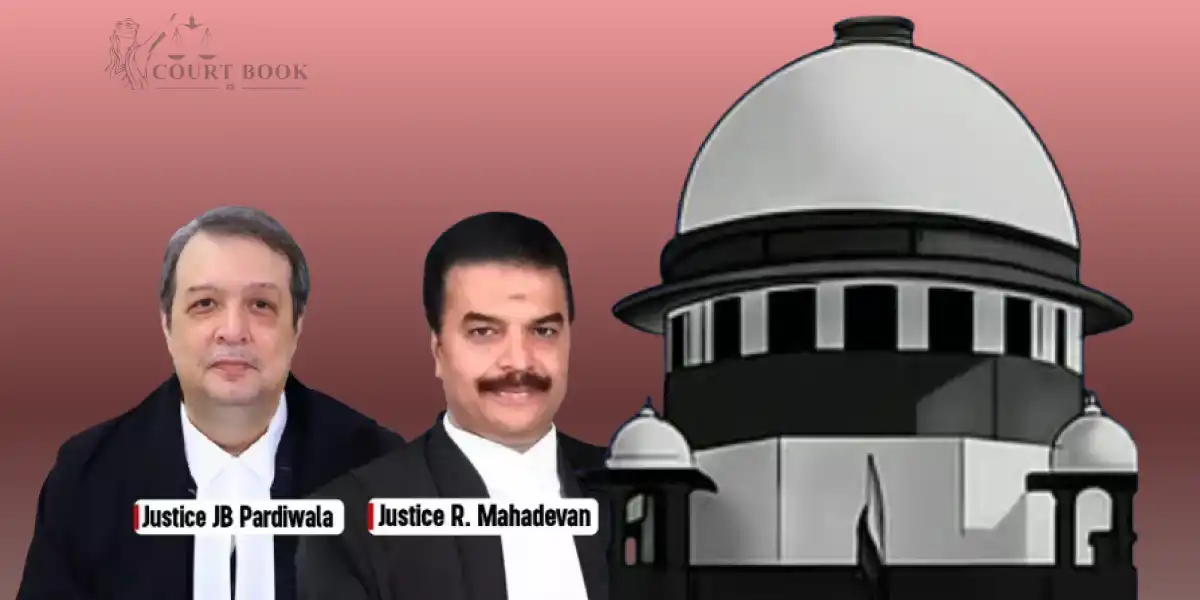
In a landmark judgment that places dignity, education, and equality at the centre of public policy, the Supreme Court on Tuesday held that access to menstrual hygiene is a fundamental right linked to the right to life and education under the Constitution. The ruling came in a public interest petition filed by social worker Dr. Jaya Thakur, seeking basic menstrual facilities for school-going girls across India.
Background of the Case
The petition was filed under Article 32, highlighting the harsh realities faced by adolescent girls in government and aided schools. It pointed to the absence of sanitary pads, lack of separate toilets, poor waste disposal systems, and social stigma surrounding menstruation.
Read Also:-Kerala High Court Quashes Suicide Abetment Case, Says Angry Words Alone Don’t Prove Criminal
Dr. Thakur urged the court to direct authorities to provide free sanitary napkins, ensure functional girls’ toilets, appoint cleaners, and introduce menstrual awareness programmes across schools. The plea argued that thousands of girls drop out or remain absent from school every month due to these basic shortcomings.
What the Court Examined
A Bench comprising Justice J.B. Pardiwala and Justice R. Mahadevan examined whether:
• Lack of menstrual hygiene facilities violates the right to equality under Article 14
• Denial of menstrual dignity infringes Article 21
• Absence of toilets and sanitary products affects the right to education under Article 21A
• The State has a constitutional duty to ensure menstrual health in schools
The court also reviewed data from multiple states, central schemes, and international conventions on education and women’s rights.
Read Also:-Delhi High Court Rejects Sameer Wankhede’s Defamation Suit Against Netflix Show ‘Ba*ds
Court’s Observations
The Bench made strong observations on how menstruation continues to push girls out of classrooms.
“The right to education does not exist in isolation. It loses meaning when girls are forced to stay home due to lack of basic menstrual facilities,” the court observed.
Calling education a “multiplier right,” the judges held that dignity, privacy, and health are inseparable from learning. The court noted that menstruation-related absenteeism is not a personal issue but a structural failure of the State.
The Bench further remarked:
“A period should end a sentence, not a girl’s education.”
The judgment stressed that treating menstruation as a private issue has resulted in systemic neglect, forcing girls to drop out or attend school in unsafe conditions.
Read Also:-UGC's 2026 Anti-Discrimination Rules Face Protest by Lawyers Near Allahabad High Court
Menstrual Health Linked to Fundamental Rights
The court held that menstrual health is an integral part of:
• Right to Life (Article 21): Includes dignity, privacy, and bodily autonomy
• Right to Equality (Article 14): Girls cannot be placed at a disadvantage due to biological realities
• Right to Education (Article 21A): Access must be meaningful, not merely formal
It also noted that the lack of toilets, water, and sanitary products disproportionately affects girls, especially those from rural and economically weaker backgrounds.
Role of the State and Existing Schemes
The judgment took note of several government schemes such as:
• Samagra Shiksha
• Swachh Bharat Mission
• Menstrual Hygiene Scheme
• State-level pad distribution and toilet infrastructure projects
However, the court found that implementation remains inconsistent, with many states failing to file affidavits or demonstrate effective execution.
“The problem is not the absence of policy, but the absence of consistent implementation,” the Bench noted.
Read Also:-Supreme Court Sets Aside Odisha Land Dispute Orders, Says Section 47 CPC Misused After Decree
Key Findings of the Court
• Menstrual hygiene is a constitutional concern, not a welfare issue
• Girls’ education cannot be compromised due to biological factors
• Access to clean toilets and sanitary products is a non-negotiable requirement
• States have a positive obligation to remove barriers faced by menstruating students
• Equality requires affirmative action, not just equal treatment
Final Decision
The Supreme Court held that:
• The right to menstrual health forms part of the right to life and dignity
• Denial of sanitary facilities violates Articles 14, 21, and 21A
• Governments must ensure effective implementation of menstrual hygiene schemes
• Access to toilets, sanitary products, and awareness programs is mandatory for schools
The writ petition was disposed of with directions to ensure consistent enforcement of existing policies and to treat menstrual hygiene as a constitutional responsibility rather than a discretionary welfare measure.
Case Title: Dr. Jaya Thakur v. Union of India & Ors.
Case Number: Writ Petition (Civil) No. 1000 of 2022
Decision Date: 30/01/2026
Download Judgment

