

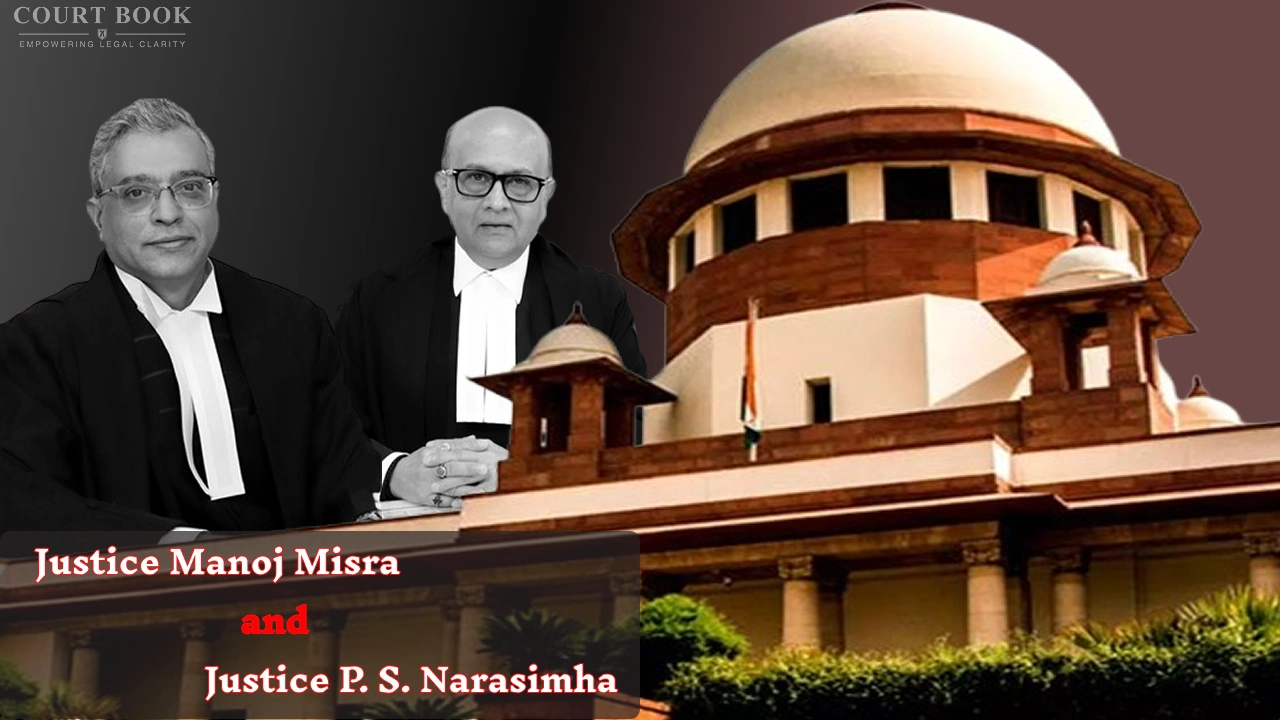
In a significant ruling, the Supreme Court has partly allowed two criminal appeals arising from a fatal family dispute in Tamil Nadu, modifying convictions and reducing sentences. The bench clarified the limits of “obscenity” under law and carefully assessed whether the incident amounted to culpable homicide.
Background of the Case
The case stemmed from a 2014 dispute between close relatives over a shared property boundary. The conflict escalated when the deceased attempted to fence the land despite objections.
Read Also: Karnataka HC Refuses to Quash SC/ST Case Against Factory Owners, Says Delay Alone Not Enough
According to the prosecution, during a heated argument:
• One accused attacked with a farming tool (aruval), injuring a witness.
• Another struck the deceased on the head with a wooden log.
• The deceased later succumbed to a severe head injury.
The Trial Court convicted two accused for lesser offences, while acquitting two others. The High Court later enhanced the conviction to culpable homicide (Section 304 Part II IPC) and imposed five years’ imprisonment.
Court’s Observations
On “Obscene Words” Charge
The Court examined whether using abusive language like “bastard” amounted to an offence under Section 294(b) IPC.
Rejecting this, the bench observed:
“Mere use of the word ‘bastard’… is not sufficient to arouse prurient interest.”
It clarified that vulgar language alone does not qualify as “obscene” unless it provokes sexual or lustful thoughts.
On Common Intention
The Court found no evidence that both accused shared a common intention to cause death.
“The circumstances do not establish that A-1 shared common intention with A-2,” the bench noted, pointing out that the first accused only caused minor injuries to a witness.
Read Also : MP High Court Clears OBC Appointment Row: Income of Husband Not Relevant for Creamy Layer Status
Nature of the Incident
The judges highlighted that:
• The fight arose suddenly over a boundary dispute.
• Weapons used were picked up from the spot.
• Only a single fatal blow was inflicted.
This indicated the act occurred “in the heat of the moment,” rather than being pre-planned.
Decision
Conviction under Section 294(b) IPC (obscenity): Set aside for both accused.
First Accused (Senthil):
• Conviction for culpable homicide removed.
• Conviction under Section 324 IPC upheld.
• Sentence reduced to period already undergone.
Second Accused (Sivakumar):
• Conviction under Section 304 Part II IPC upheld.
• Sentence reduced from 5 years to 3 years.
The Court directed that Sivakumar surrender to serve the remaining sentence, while Senthil, already on bail, need not return to custody.
Case Details
Case Title: Sivakumar vs State & Senthil @ Janakiram vs State
Case Number: Criminal Appeal No. 1807 of 2019 & 677 of 2020
Judge: Justice Manoj Misra (with Justice P.S. Narasimha)
Decision Date: April 6, 2026
Download Judgment

