

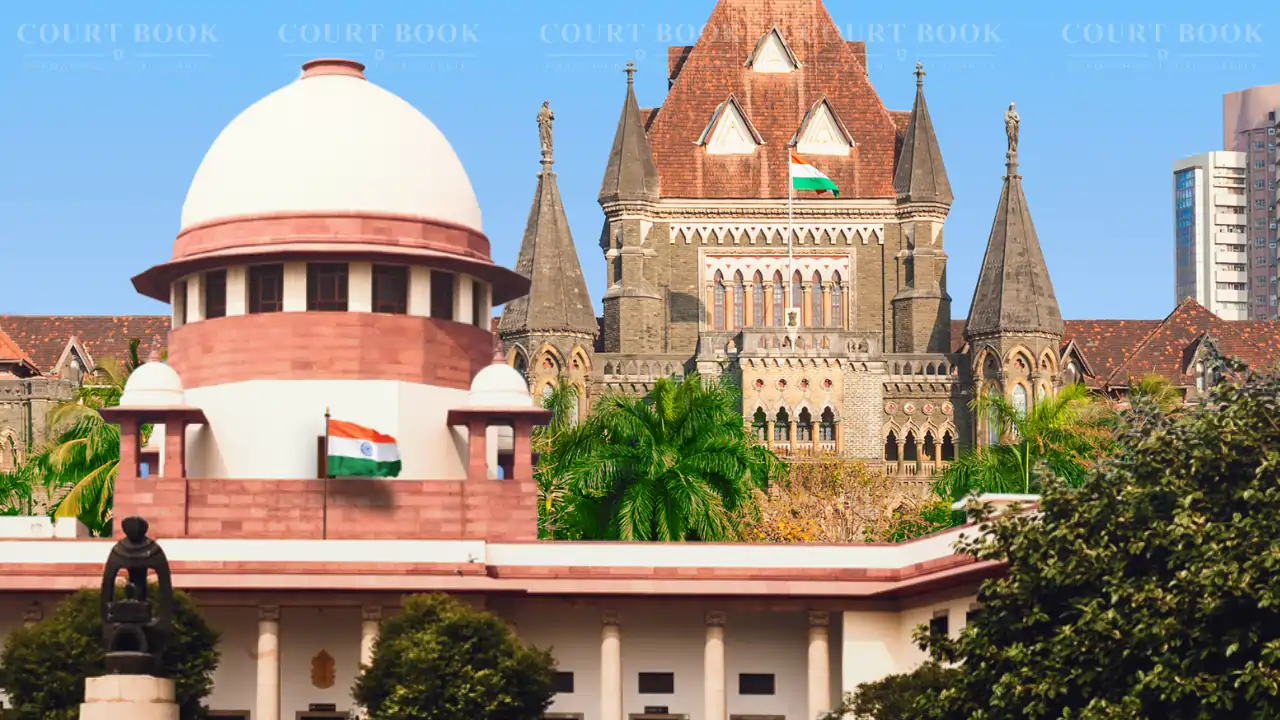
A long-running demand from Maharashtra’s southern districts reached the Supreme Court this week, where a writ petition challenged the Bombay High Court’s decision to hold sittings at Kolhapur. After detailed arguments, the Court declined to interfere, firmly backing the administrative authority of the Chief Justice and underlining limits on judicial review in such matters.
हिंदी में पढ़ें
Background
The case arose from an administrative notification dated August 1, 2025, issued by the Bombay High Court, appointing Kolhapur as an additional place where its judges and division benches may sit. The arrangement became operational from August 18, covering cases from Kolhapur, Sangli, Satara, Ratnagiri and Sindhudurg.
Read also:-Supreme Court Overturns Telangana High Court Orders, Says Expired Driving Licences Break Eligibility for Police Driver Recruitment Posts
Petitioner Ranjeet Baburao Nimbalkar moved the Supreme Court under Article 32, arguing that this step effectively created a permanent bench without following the constitutionally mandated route. According to him, such a move required a Presidential order under Section 51(2) of the States Reorganisation Act, 1956, not a notification under Section 51(3). He also claimed lack of proper consultation and alleged discrimination against other regions like Pune and Solapur.
Court’s Observations
A Bench of Justice Aravind Kumar and Justice N.V. Anjaria was not persuaded. Reading Section 51 closely, the Court said Parliament had deliberately given the Chief Justice a continuing power to decide where the High Court may sit, with the Governor’s approval.
Read also:-Supreme Court quashes ESI demand against Carborandum Universal, says Section 45A can’t replace proper adjudication when records
“The non-obstante clause in Section 51(3) is not accidental,” the bench observed, adding that the provision exists to ensure flexibility in judicial administration and improve access to justice. The judges noted that sittings under Section 51(3) do not create a new High Court or permanently divide territory; judges continue to function as part of the same High Court.
On the argument that earlier proposals for additional benches were rejected, the Court was clear that administrative decisions are not frozen in time. “Past views do not create an estoppel,” the bench remarked, pointing out that changing circumstances, litigation load and infrastructure can justify a fresh decision.
The plea under Article 14 also found little favour. The Court said equality does not mean every region must be treated identically at the same time. Choosing Kolhapur had a rational basis, given distance from Mumbai and the cluster of districts involved. As for Article 21, the bench held that decentralising High Court sittings can, in fact, advance access to justice rather than weaken it.
Read also:-Supreme Court Restores Arbitral Award Against BALCO, Says High Court Overstepped Limits
Decision
Finding no mala fides or legal infirmity, the Supreme Court upheld the notification appointing Kolhapur as a place of sitting of the Bombay High Court. “The challenge is without merit,” the bench concluded, dismissing the writ petition without costs and allowing the Kolhapur sittings to continue.
Case Title: Ranjeet Baburao Nimbalkar v. State of Maharashtra & Anr.
Case No.: Writ Petition (Civil) No. 914 of 2025
Case Type: Constitutional Writ Petition under Article 32 of the Constitution of India
Decision Date: December 18, 2025
Download Judgment

