

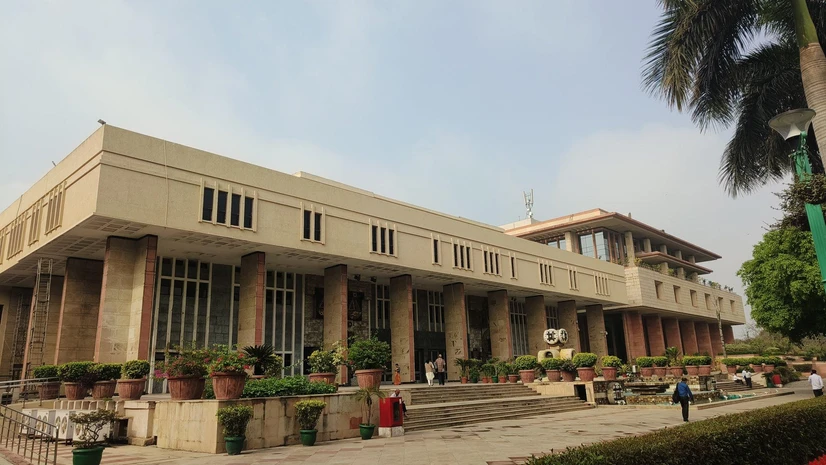
On a quiet winter afternoon at the Delhi High Court, Justice Sanjeev Narula brought closure to a long-running family dispute that had taken a criminal turn. Hearing a petition filed by Ved Prakash and other legal heirs, the court set aside summoning orders that had pushed them into facing charges of cheating and forgery over a mutation of ancestral land in Najafgarh. The courtroom mood was firm but measured, as the judge walked through why criminal law, in this case, had been stretched too far.
हिंदी में पढ़ें
Background
The dispute traces back to agricultural land inherited from late Chunni Lal. One of the heirs, Sukhbir Singh, had alleged that his signatures were forged on an affidavit submitted before revenue authorities to mutate the land in the names of all heirs. After his death, his son pursued the complaint.
Read also:- Unnao Rape Case Reaches Supreme Court Again as Plea Challenges Delhi High Court’s Suspension of Kuldeep Sengar's Life Sentence
Earlier attempts to get an FIR registered did not succeed. A forensic report later failed to give a clear opinion on the signatures. Despite this, a magistrate compared the signatures visually and summoned most of the heirs for offences like cheating and forgery. A sessions court upheld that decision, leading the heirs to approach the Delhi High Court under its inherent powers.
Court’s Observations
Justice Narula took pains to simplify what was really at stake. Mutation, the court noted, is mainly a revenue entry. It records who the heirs are; it does not decide ownership. “The mutation ultimately recorded the complainant as a co-owner,” the bench observed, adding that no outsider had been introduced and no share taken away.
Read also:- Calcutta High Court Rules MSTC Can Recover Gratuity Losses Under CDA Rules, Sets Aside Single Judge Order in Senior CMD Dispute
On cheating, the court said mere allegation of impersonation is not enough. There must be deception leading to actual loss or unlawful gain. Here, none was shown. On forgery, the judge was equally blunt. Criminal liability, he said, depends on identifying who actually made the false document. Broad claims that all family members acted together cannot replace specific facts.
The court was also critical of the magistrate’s reliance on personal comparison of signatures after an inconclusive forensic report, and of the complainant’s failure to disclose that his own son had later given a “no objection” for mutation before the SDM. That suppression, the judge remarked, cut at the root of the prosecution’s story.
Read also:- Allahabad High Court dismisses accused's revision plea, reiterates no challenge lies against magistrate's FIR order under Section 156(3) CrPC
Decision
Concluding that the case was essentially a family succession dispute dressed up as a criminal prosecution, the High Court allowed the petition. The summoning order and the revisional order were set aside, and the criminal proceedings against the petitioners were quashed, while leaving the parties free to pursue civil or revenue remedies if they so choose.
Case Title: Ved Prakash & Ors. vs State (NCT of Delhi) & Anr.
Case No.: CRL.M.C. 6495/2019 with CRL.M.A. 42827/2019
Case Type: Criminal Miscellaneous Petition under Section 482 CrPC
Decision Date: 24 December 2025


