

In a significant ruling on central excise law, the Supreme Court examined whether tax exemption on Naphtha used in fertilizer production could be denied when part of it indirectly served other industrial processes. The case revolved around the interpretation of the term “intended use” under exemption notifications.
Background of the Case
The dispute arose when M/s. Rashtriya Chemicals and Fertilizers Limited (RCF), a public sector undertaking, procured Naphtha at zero duty under government notifications meant for fertilizer manufacturing.
In 2001, excise officials inspected RCF’s plant and alleged that the Naphtha was not used exclusively for fertilizer production. According to the department, part of the fuel contributed to generating steam and electricity used in other units, including chemical and heavy water plants.
Read also:- Bombay High Court Upholds Railway Shoe-Shine Tender Policy, Rejects Monopoly Claim by Workers’ Society
A show cause notice followed, demanding over ₹28 crore in duty for the period between 1996 and 2001.
RCF denied the allegations, maintaining that the fuel was used as intended either directly or indirectly for fertilizer production.
The matter saw multiple rounds of adjudication:
• The Commissioner confirmed the duty demand and imposed penalties.
• The Customs, Excise and Service Tax Appellate Tribunal (CESTAT) upheld the duty and penalty under Section 11AC but removed penalties under certain rules.
• The Bombay High Court dismissed RCF’s appeal on rectification.
The dispute ultimately reached the Supreme Court through multiple connected appeals.
Read also:- Supreme Court Allows Pension Relief for DSC Personnel, Says Shortfall Can Be Condoned
At the heart of the case was a narrow but important question:
Does exemption depend on actual exclusive use, or is intended use sufficient?
RCF argued that the exemption notifications only required proof that Naphtha was intended for fertilizer production not that every unit of it must be directly traceable to that process.
The tax department, however, claimed that diversion direct or indirect invalidated the exemption.
The bench closely examined how the fuel was used within the plant.
Read also:- Wife Moves Allahabad High Court Over Non-Payment of Maintenance in DV Act Case
It noted that:
• Naphtha and natural gas were used together in a common boiler.
• Steam generated was distributed across multiple units.
• It was practically impossible to segregate the exact use of each fuel source.
The Court also highlighted that exemption notifications referred to “intended use”, not “exclusive use.”
“The requirement is to establish that the goods were meant for the specified purpose,” the bench observed, emphasizing that the language of the notification must be read carefully.
On the issue of limitation, the Court examined whether there was any deliberate suppression by the company to justify extended limitation for tax recovery.
Read also:- Supreme Court Dismisses SLP in Bharat Udyog Case, Rules No Valid Arbitration Without Consent
The Supreme Court allowed the appeals filed by RCF, setting aside the findings that denied exemption based on alleged diversion.
It held that the benefit of exemption could not be denied merely because the fuel was used in an integrated process where precise segregation was not feasible, as long as the intended use condition was satisfied.
Consequently, the related appeal arising from the High Court order was rendered infructuous.
Case Details
Case Title: M/s Rashtriya Chemicals and Fertilizers Ltd vs Commissioner of Central Excise & Service Tax
Case Number: Civil Appeal Nos. 2219–2220 of 2013 & connected appeal (2026)
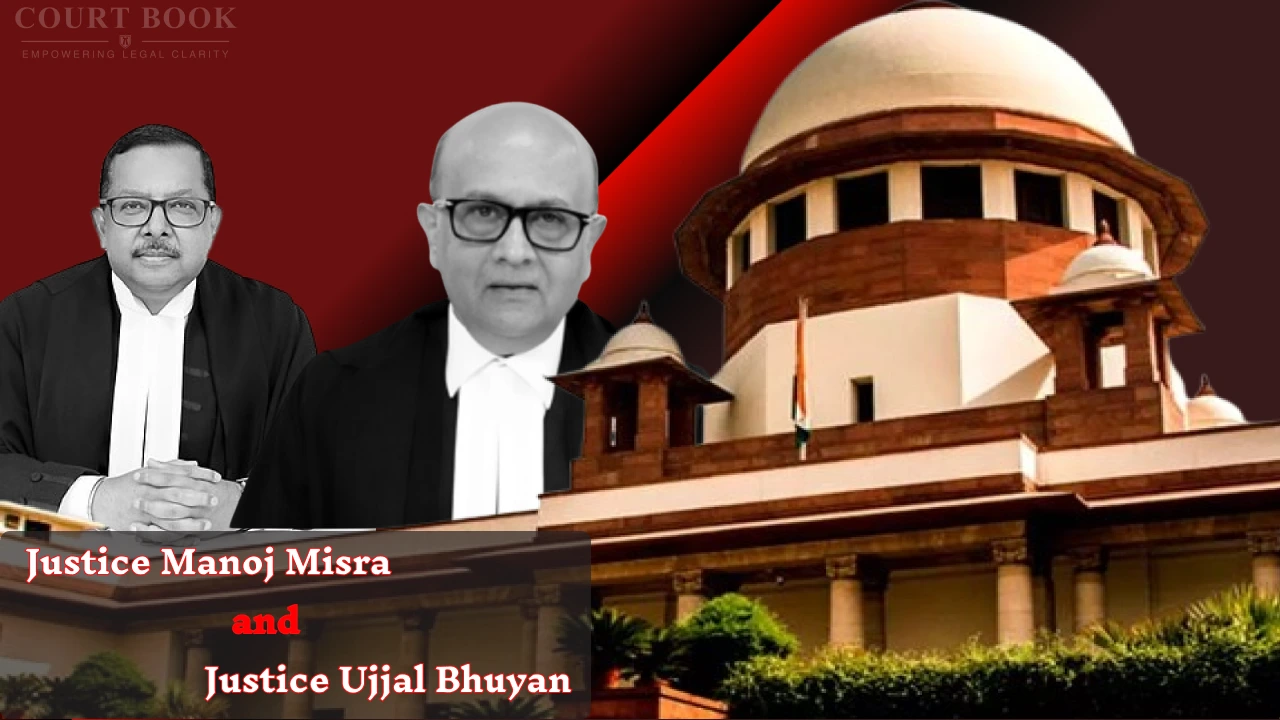
Judge: Justice Ujjal Bhuyan and Justice Manoj Misra
Decision Date: 24 March 2026
Download Judgment

